Bodhisattva (700s): Art, History and Details
Bodhisattva at the Cleveland Museum of Art: 700s, white marble. Explore the work's context, creator attribution and collection history.
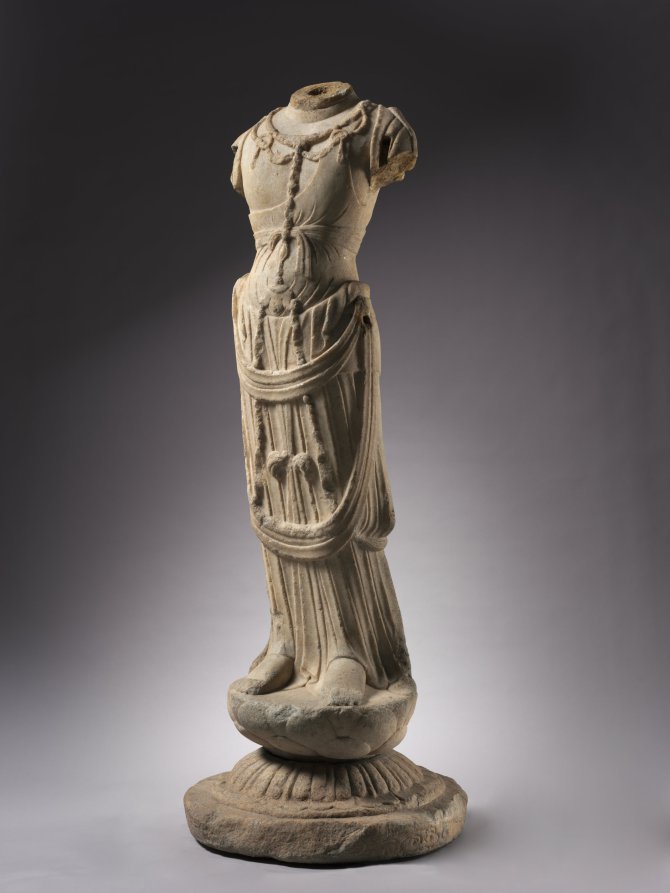
Bodhisattva (700s) is in the Cleveland Museum of Art collection.
The work and its context
The museum's open-access catalogue describes the work:
The bodhisattva is an enlightened being dedicated to the spiritual awakening of all beings. This white marble torso exemplifies the quest for refinement and plasticity of form that mark the golden era of Tang Chinese Buddhist sculpture. The statue was conceived with great power and grandeur. The slight sway of the hip on one side and upraised shoulder on the other result in an elegant S-curve. Emphatic lines cut into the stone create a sense of rhythm and reveal the sculptor’s skill and sureness of execution.
Object facts
- Title: Bodhisattva
- Date: 700s
- Culture: China, Hebei province, Tang dynasty (618-907)
- Type: Sculpture
- Technique: white marble
- Dimensions: Overall: 177.8 x 64 x 58.5 cm (70 x 25 3/16 x 23 1/16 in.); without base: 157.4 cm (61 15/16 in.)
- Collection: China - Tang Dynasty
- Department: Chinese Art
- Accession number: 1929.981
Collection credit
Purchase from the J. H. Wade Fund
Further reading listed by the museum
- Omura, Seigai 大村西崖. History of Chinese Art. Tokyo: [publisher not identified],1915.,
- Hollis, Howard C. “A Seventh Century Bodhisattva.” The Bulletin of the Cleveland Museum of Art 17, no. 2 (February 1930): 22–23, 27.
- Milliken, William. "Silver Jubilee Exhibition." The Bulletin of the Cleveland Museum of Art 28, no.6 (June 1941): 88–108.
View the collection record
See the museum's photographs and full catalogue entry. Catalogue text is reproduced from the Cleveland Museum of Art's open-access data, with HTML formatting removed. This object and its supplied image are designated CC0.
Sources
More in Lifestyle
Keep reading