Bowl with Carved Lotus Design (1100s–1300s): Art, History and Details
Bowl with Carved Lotus Design at the Cleveland Museum of Art: 1100s–1300s, Stoneware with pale green (celadon) glaze. Explore the work's context, creator attribution and collection history.
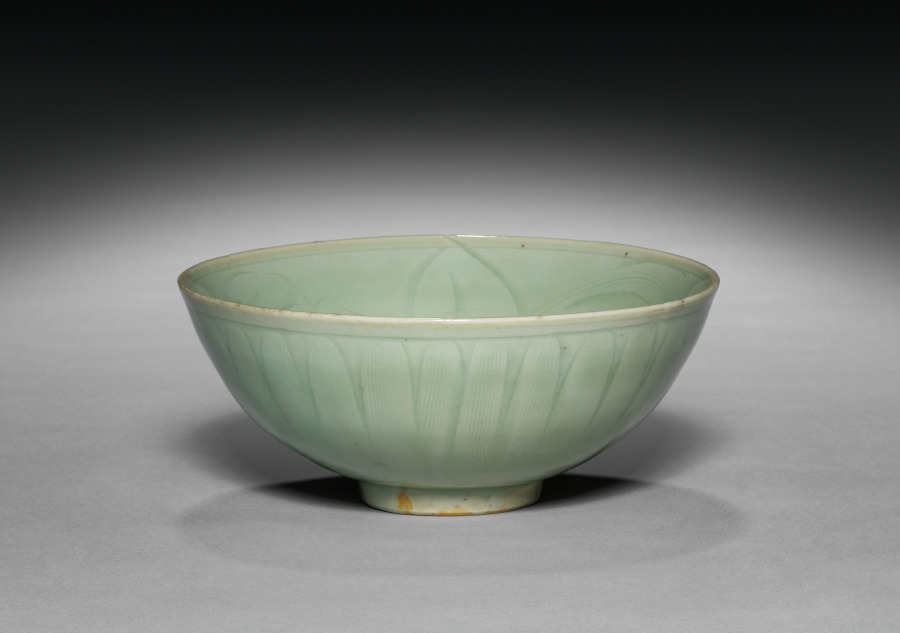
Bowl with Carved Lotus Design (1100s–1300s) is in the Cleveland Museum of Art collection.
The work and its context
The museum's open-access catalogue describes the work:
This pale green–glazed bowl is decorated with a medallion at the center and a lotus motif on the inside and outside walls. China’s increasingly prosperous ceramic industry began exporting green stoneware during the Tang dynasty (618–906) as far as North Africa. Imitations in Korea, Japan, Southeast Asia, and the Middle East are evidence of its popularity and enormous success as export ware.
Object facts
- Title: Bowl with Carved Lotus Design
- Date: 1100s–1300s
- Culture: China, Southern Song (1127–1279) to Yuan dynasty (1279–1368)
- Type: Ceramic
- Technique: Stoneware with pale green (celadon) glaze
- Dimensions: Overall: 6.6 x 15.5 cm (2 5/8 x 6 1/8 in.)
- Collection: China - Song Dynasty
- Department: Chinese Art
- Accession number: 2020.181
A detail from the museum
In Chinese Buddhist culture, the lotus flower symbolizes good fortune and the process of achieving spiritual enlightenment.
Collection credit
Nancy F. and Joseph P. Keithley Collection Gift
Further reading listed by the museum
- Von Spee, Clarissa. "Chinese Ceramics and Works on Paper." In The Keithley Collection at the Cleveland Museum of Art, edited by Heather Lemonedes Brown, 194–229. Cleveland, OH: The Cleveland Museum of Art, 2022.
View the collection record
See the museum's photographs and full catalogue entry. Catalogue text is reproduced from the Cleveland Museum of Art's open-access data, with HTML formatting removed. This object and its supplied image are designated CC0.
Sources
More in Lifestyle
Keep reading