Buddhist Ritual Bell (1300s): Art, History and Details
Buddhist Ritual Bell at the Cleveland Museum of Art: 1300s, bronze; with incised designs. Explore the work's context, creator attribution and collection history.
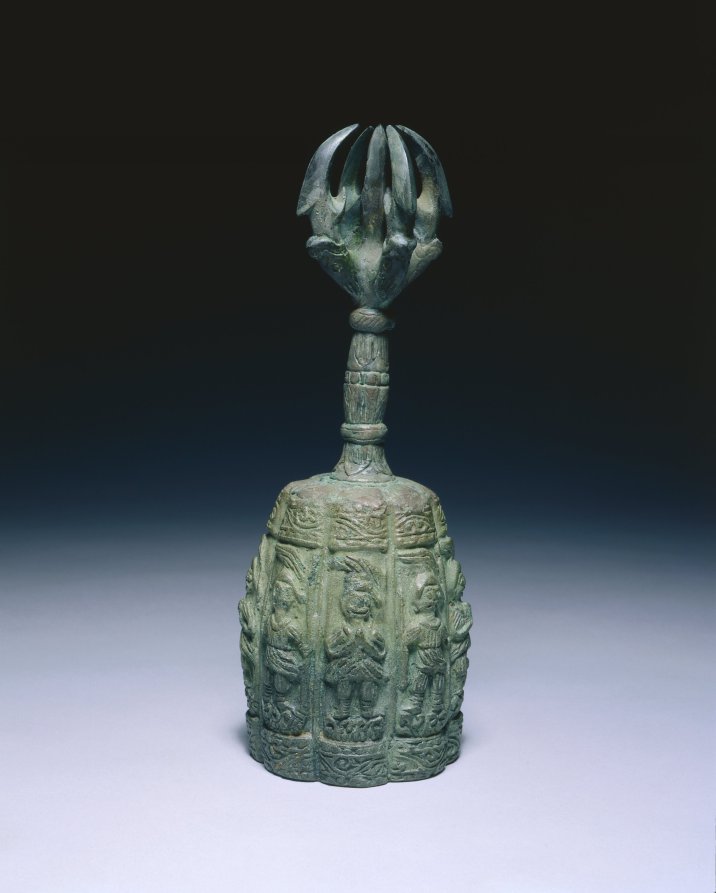
Buddhist Ritual Bell (1300s) is in the Cleveland Museum of Art collection.
The work and its context
The museum's open-access catalogue describes the work:
This Buddhist ritual bell is called the "five-pronged" bell due to the four prongs bending toward a central prong at the end of the handle. This shape is a vajra, or lightning bolt, a powerful and important symbol in esoteric Buddhism, which originated in India, spread across Asia, and was practiced in Korea.
Object facts
- Title: Buddhist Ritual Bell
- Date: 1300s
- Culture: Korea, Goryeo dynasty (918–1392)
- Type: Metalwork
- Technique: bronze; with incised designs
- Dimensions: Overall: 17.8 x 6.6 cm (7 x 2 5/8 in.)
- Collection: Korean Art
- Department: Korean Art
- Accession number: 1998.123
A detail from the museum
Called a vajra in Sanskrit, this implement is used in Buddhist rituals meant to destroy ignorance.
Collection credit
Gift of Mitsuru Tajima
Further reading listed by the museum
- Goryeo Dynasty: Korea's Age of Enlightenment, 918-1392. San Francisco: Asian Art Museum, 2003.
- Cunningham, Michael R. "Sacred Metalwork of Korea." Cleveland Art: The Cleveland Museum of Art Members Magazine 43, no. 5 (May 2003): 8–9.
- Choi, Eung-chon. “Craftsmen in Metal Arts in the Goryeo Dynasty [고려시대 金屬工藝의 匠人].” Misulsahak yeongu (2004): 171–192.
View the collection record
See the museum's photographs and full catalogue entry. Catalogue text is reproduced from the Cleveland Museum of Art's open-access data, with HTML formatting removed. This object and its supplied image are designated CC0.
Sources
More in Lifestyle
Keep reading