Chalcidian Helmet (c. 350–200 BCE): Art, History and Details
Chalcidian Helmet at the Cleveland Museum of Art: c. 350–200 BCE, Tinned bronze. Explore the work's context, creator attribution and collection history.
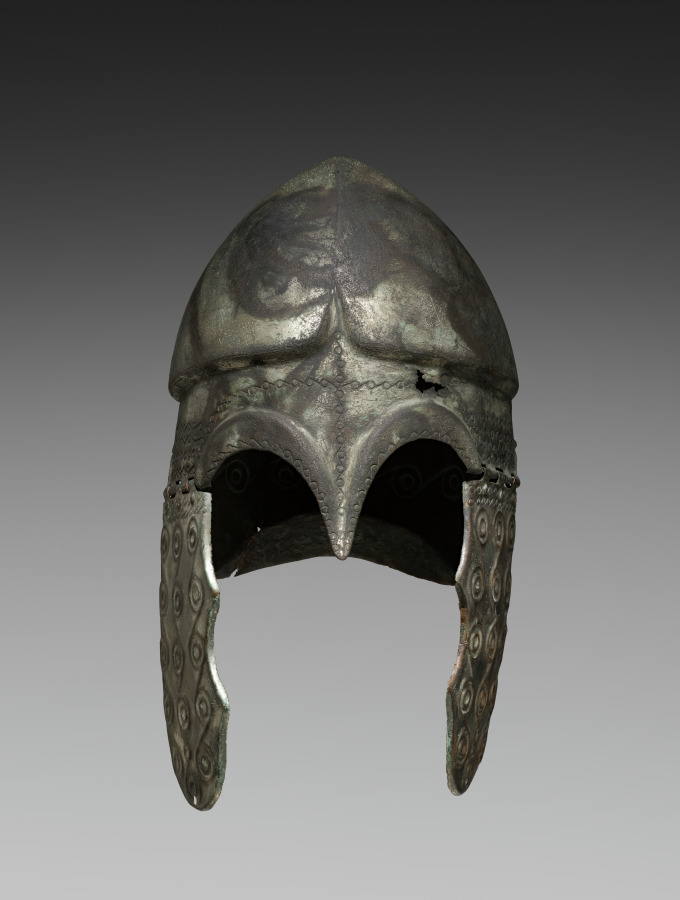
Chalcidian Helmet (c. 350–200 BCE) is in the Cleveland Museum of Art collection.
The work and its context
The museum's open-access catalogue describes the work:
Among ancient helmets, the Chalcidian type is varied, widespread, and comparatively unrestrictive, with relatively wide openings for the eyes and ears. This example, probably made in the Black Sea region or even further east, features a pointed noseguard, high carinated crown, molded brow ridge, and everted rear flange, plus large separately made hinged cheekpieces. The tinned bronze surface is almost silver in color, with extensive decoration including small incised linked scrolls and much larger embossed linked scrolls.
Object facts
- Title: Chalcidian Helmet
- Date: c. 350–200 BCE
- Culture: Greek (perhaps Black Sea area)
- Type: Arms and Armor
- Technique: Tinned bronze
- Dimensions: height: 31.8 cm (12 1/2 in.)
- Collection: GR - Greek
- Department: Greek and Roman Art
- Accession number: 2023.106
A detail from the museum
Although named for Chalcis, a city in Euboia, Chalcidean helmets were made across the Greek world.
Collection credit
Gift of Barbara S. Robinson and Family
View the collection record
See the museum's photographs and full catalogue entry. Catalogue text is reproduced from the Cleveland Museum of Art's open-access data, with HTML formatting removed. This object and its supplied image are designated CC0.
Sources
More in Lifestyle
Keep reading