Flute (c. 500–200 BCE): Art, History and Details
Flute at the Cleveland Museum of Art: c. 500–200 BCE, hammered and cut gold. Explore the work's context, creator attribution and collection history.
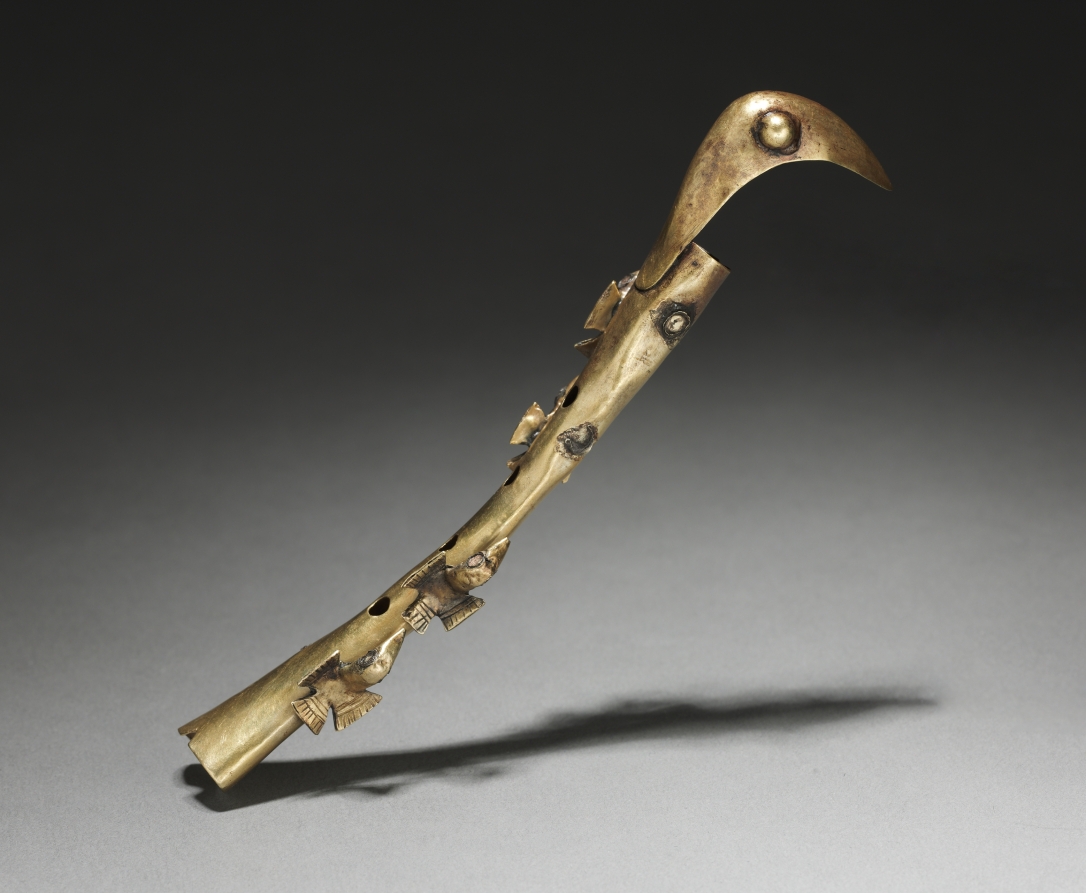
Flute (c. 500–200 BCE) is in the Cleveland Museum of Art collection.
The work and its context
The museum's open-access catalogue describes the work:
There seems to be a link between Chavín religion and appearance of the Andes’ first large precious-metal objects, made using revolutionary new metallurgical processes. Chavín may have developed these technical innovations to express the inexpressible, the "wholly other" nature of its religion. In many areas, elite men and women wore the ornaments as emblems of their ties to this religion, and eventually were buried with them. These 16 objects, along with three others not in the museum’s collection, are said to have come as a group from Chavín itself.
Object facts
- Title: Flute
- Date: c. 500–200 BCE
- Culture: Peru, Northern Highlands, Chavín de Huantar(?), Chavín style
- Type: Metalwork
- Technique: hammered and cut gold
- Dimensions: Overall: 14 cm (5 1/2 in.)
- Collection: AA - Andes
- Department: Art of the Americas
- Accession number: 1957.398
Collection credit
Gift of Mr. and Mrs. Paul Tishman
Further reading listed by the museum
- The Brummer Gallery Records. Cloisters (Museum), n.d.
View the collection record
See the museum's photographs and full catalogue entry. Catalogue text is reproduced from the Cleveland Museum of Art's open-access data, with HTML formatting removed. This object and its supplied image are designated CC0.
Sources
More in Lifestyle
Keep reading