Leaf from a Gradual: Initial (R) with the Three Marys at the Tomb and "Noli me Tangere" (c. 1270–1300): Art, History and Details
Leaf from a Gradual: Initial (R) with the Three Marys at the Tomb and "Noli me Tangere" at the Cleveland Museum of Art: c. 1270–1300, Ink, tempera, and gold on vellum. Explore the work's context, creator attribution and collection history.
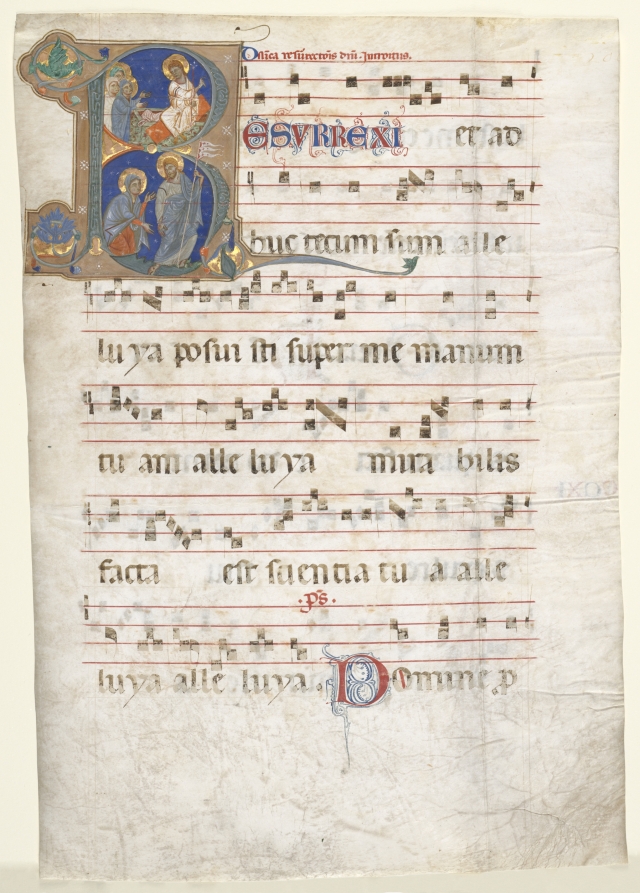
Leaf from a Gradual: Initial (R) with the Three Marys at the Tomb and "Noli me Tangere" (c. 1270–1300) is in the Cleveland Museum of Art collection.
The work and its context
The museum's open-access catalogue describes the work:
This choral leaf introduces the introit, or opening prayers, of the Easter Sunday Mass. The historiated letter R begins the text Resurrexi, et adhuc tecum sum, alleluia (I arose, and am still with you, alleluia). Within the upper register of the initial, the artist represents the three women named Mary, mentioned in the gospels, who discovered Christ’s empty tomb. In the lower register, a scene known simply as noli me tangere (touch me not), recounts the appearance of Christ to Mary Magdalene following the Resurrection. When she recognized him, he asked that she not touch him but go to the disciples with the message that he was now risen.
Object facts
- Title: Leaf from a Gradual: Initial (R) with the Three Marys at the Tomb and "Noli me Tangere"
- Date: c. 1270–1300
- Culture: Italy
- Type: Manuscript
- Technique: Ink, tempera, and gold on vellum
- Dimensions: Sheet: 55 x 33.5 cm (21 5/8 x 13 3/16 in.)
- Collection: MED - Manuscript Illuminations
- Department: Medieval Art
- Accession number: 1955.78
A detail from the museum
The name gradual derives from the practice of singing on the “gradual” steps of a raised pulpit.
Collection credit
Purchase from the J. H. Wade Fund
View the collection record
See the museum's photographs and full catalogue entry. Catalogue text is reproduced from the Cleveland Museum of Art's open-access data, with HTML formatting removed. This object and its supplied image are designated CC0.
Sources
More in Lifestyle
Keep reading