Llama Vessel (c. 200–550 CE): Art, History and Details
Llama Vessel at the Cleveland Museum of Art: c. 200–550 CE, earthenware with colored slips. Explore the work's context, creator attribution and collection history.
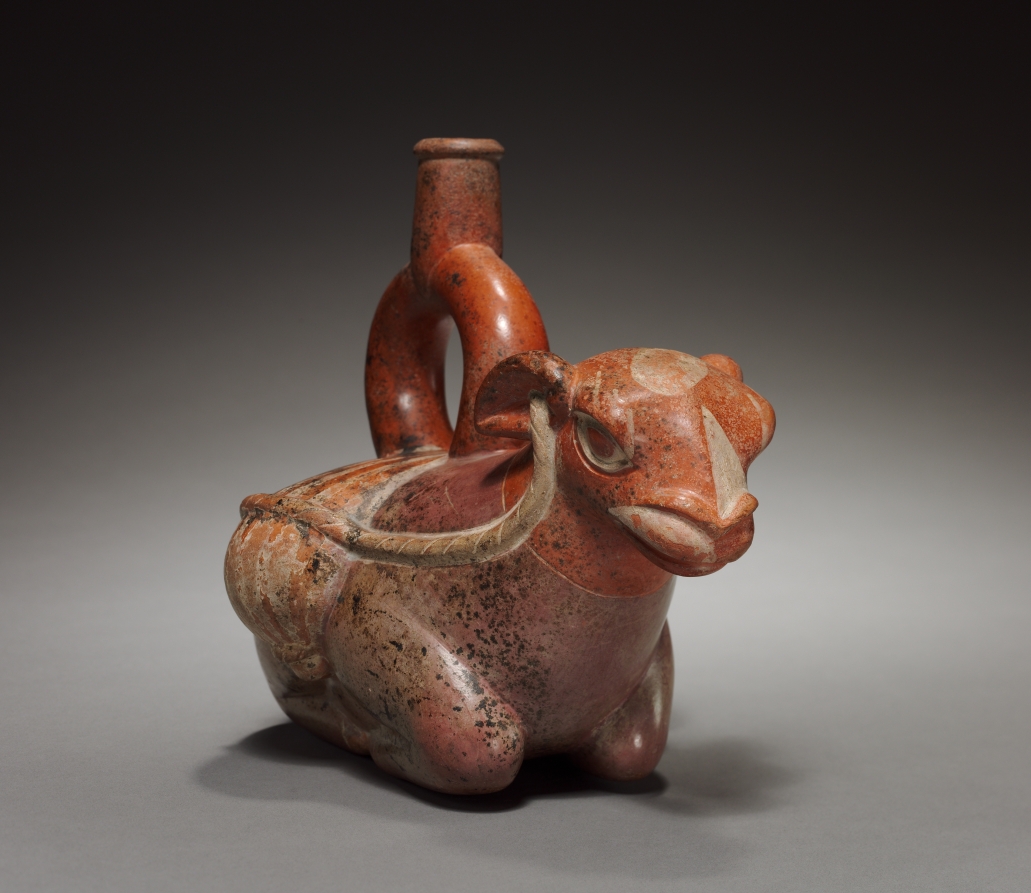
Llama Vessel (c. 200–550 CE) is in the Cleveland Museum of Art collection.
The work and its context
The museum's open-access catalogue describes the work:
It is not clear whether the llama's appearance in Moche art is explained by its importance as a sacrificial animal; as a source of meat, fertilizer, and wool; or as the Andes's only burden-bearing beast, as this vessel shows. It also may be important that llamas are natives of the mountains, where seasonal rains charge the rivers that flow down to the desert coast and make life possible.
Object facts
- Title: Llama Vessel
- Date: c. 200–550 CE
- Culture: Peru, North Coast, Moche style
- Type: Ceramic
- Technique: earthenware with colored slips
- Dimensions: Overall: 17.8 x 13.2 x 23.1 cm (7 x 5 3/16 x 9 1/8 in.)
- Collection: AA - Andes
- Department: Art of the Americas
- Accession number: 1990.128
Collection credit
John L. Severance Fund
Further reading listed by the museum
- Turner, Evan H. “Acquisitions: 1990.” The Bulletin of the Cleveland Museum of Art 78, no. 2 (February 1991): 30–45.
View the collection record
See the museum's photographs and full catalogue entry. Catalogue text is reproduced from the Cleveland Museum of Art's open-access data, with HTML formatting removed. This object and its supplied image are designated CC0.
Sources
More in Lifestyle
Keep reading