Mountain-Shaped Incense Burner (Western Han dynasty, 206 BCE–9 CE): Artwork and History
Mountain-Shaped Incense Burner at the Art Institute of Chicago: date, artist attribution, materials and the museum's explanation of the work.

Mountain-Shaped Incense Burner (Western Han dynasty, 206 BCE–9 CE) is in the Art Institute of Chicago collection. The museum lists its creator attribution as China, probably Guangdong or Guangxi province.
The work and its context
The Art Institute of Chicago describes the work:
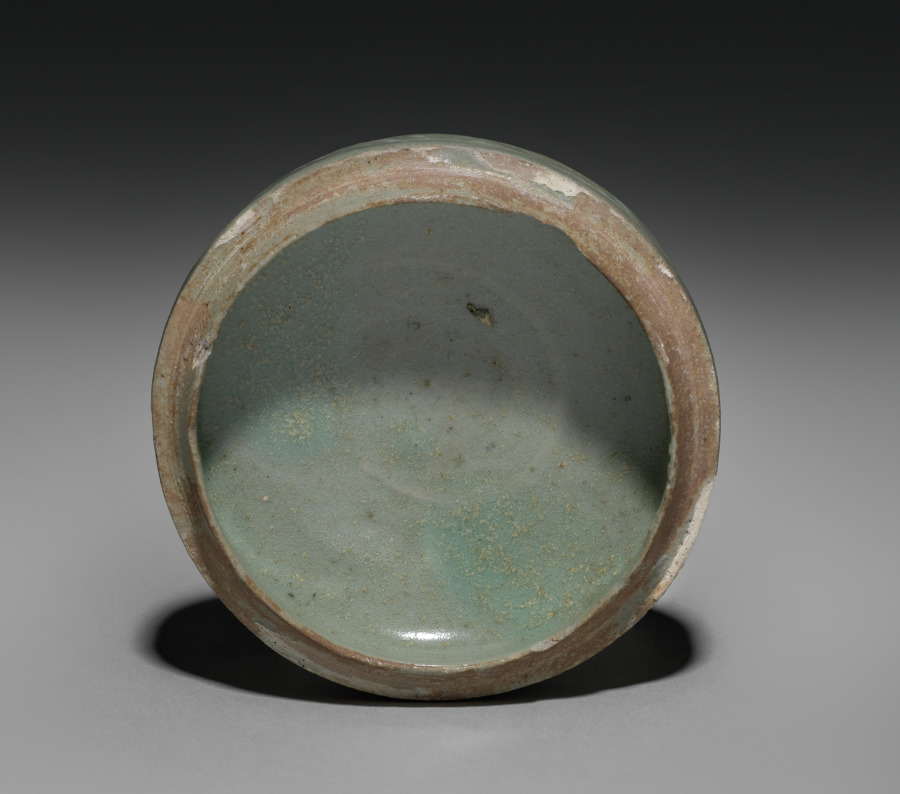
Often referred to as “boshan lu,” or hill censer, this incense burner features a conical cover shaped like miniaturized peaks, evoking the mountainous isles where the immortals reside. When incense is burnt in the step cup, fragrant smoke emanates from the openwork on the cover, animating the sacred mountains and transporting the beholder into a realm of transcendence. Covered with a green lead glaze, this pottery incense burner mimics similar objects that are commonly made in bronze. The clay material suggests that the object might have been specifically made for a funerary context.
Object facts
- Title: Mountain-Shaped Incense Burner
- Date: Western Han dynasty, 206 BCE–9 CE
- Artist attribution: China, probably Guangdong or Guangxi province
- Place of origin: China
- Medium: Brick-red earthenware with green lead glaze
- Dimensions: 22.6 × 17.5 cm (8 7/8 × 6 7/8 in.); Diam.: 17.5 cm (6 7/8 in.)
- Type: Religious/Ritual Object
- Department: Arts of Asia
- Reference number: 1924.239
Collection credit
Lucy Maud Buckingham Collection
View the original
Explore the artwork in the Art Institute's collection, including its image and the museum's current catalogue details.
The description above is credited to the Art Institute of Chicago and reused under Creative Commons Attribution 4.0; HTML formatting has been converted to plain text. Other catalogue metadata and the public-domain image are provided under CC0 1.0.
Sources
More in Lifestyle
Keep reading