Mummy Bundle "Mask" (200–1 BCE): Art, History and Details
Mummy Bundle "Mask" at the Cleveland Museum of Art: 200–1 BCE, plain warp-faced cloth, painted: cotton. Explore the work's context, creator attribution and collection history.
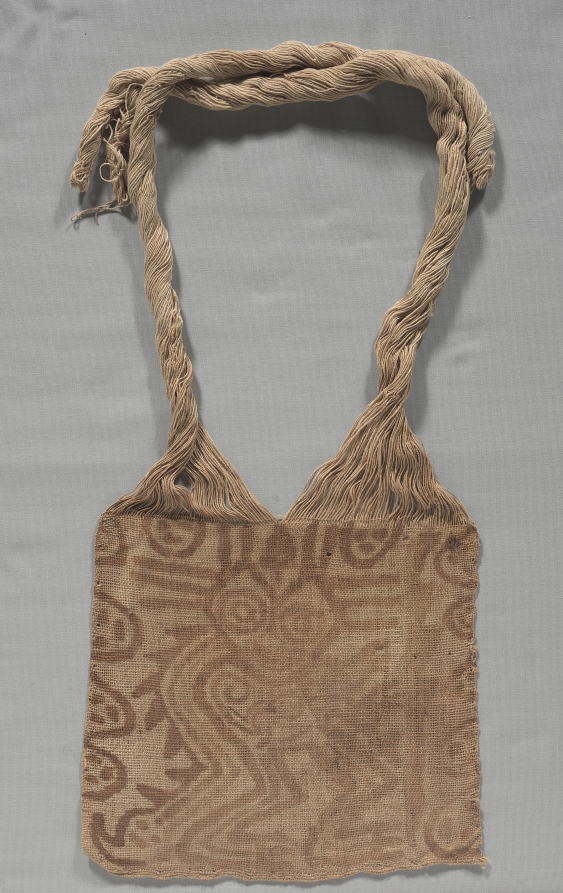
Mummy Bundle "Mask" (200–1 BCE) is in the Cleveland Museum of Art collection.
The work and its context
The museum's open-access catalogue describes the work:
The Paracas people of Peru's South Coast buried their dead in pear-shaped mummy bundles made of a seated human body carefully wrapped in garments and other textiles. Sometimes a painted cloth was placed at the top of the bundle, as though it served as the bundle's face, head, or "mask." The cloth was padded on the back so it curved outward like a face, and the tress-like yarns (unwoven warps) at the upper edge were arranged around a solid cotton disk that, in turn, was wrapped with a headband. Some cloths were painted with mask-like faces, and others with full figures, apparently mythical creatures.
Object facts
- Title: Mummy Bundle "Mask"
- Date: 200–1 BCE
- Culture: Peru, South Coast, Ica Valley, Ocucaje site, Paracas style (700 BCE–1 CE)
- Type: Textile
- Technique: plain warp-faced cloth, painted: cotton
- Dimensions: Overall: 86.3 x 28.5 cm (34 x 11 1/4 in.)
- Collection: T - Pre-Columbian
- Department: Textiles
- Accession number: 1940.525
A detail from the museum
These masks fall into two categories, those with only a face and those with a full-bodied figure.
Collection credit
The Norweb Collection
View the collection record
See the museum's photographs and full catalogue entry. Catalogue text is reproduced from the Cleveland Museum of Art's open-access data, with HTML formatting removed. This object and its supplied image are designated CC0.
Sources
More in Lifestyle
Keep reading