Portrait of Samuel Butler (c. 1715–20): Art, History and Details
Portrait of Samuel Butler at the Cleveland Museum of Art: c. 1715–20, watercolor on ivory in a period metal frame. Explore the work's context, creator attribution and collection history.
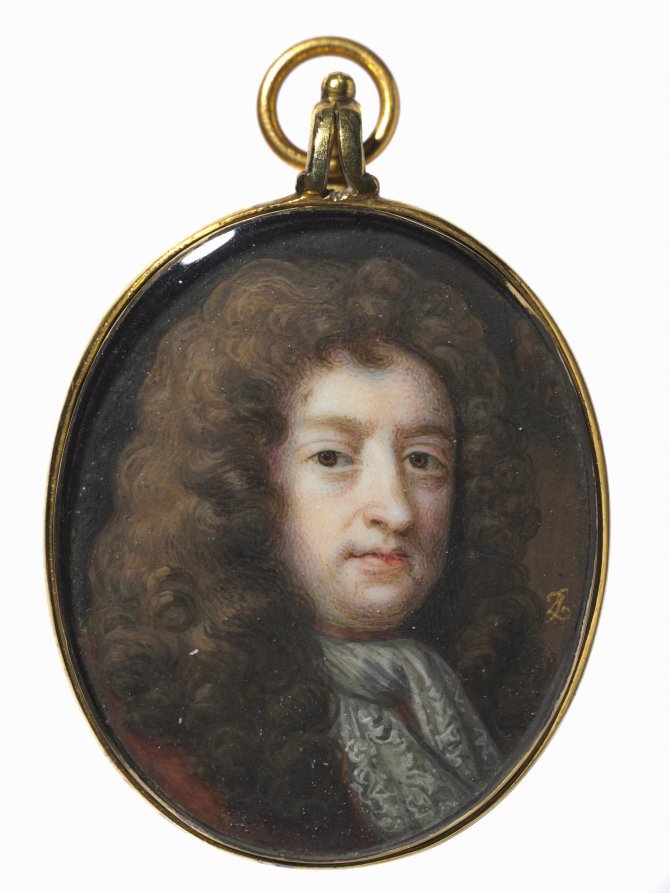
Portrait of Samuel Butler (c. 1715–20) is in the Cleveland Museum of Art collection. The museum's creator attribution is Bernard Lens (British, 1681–1740).
The work and its context
The museum's open-access catalogue describes the work:
Bernard Lens III was the most renowned member of an artist dynasty. His namesake father was a printmaker, his grandfather a painter, and two of his own sons became artists. Lens III was a critical figure in miniature painting as the art form transitioned away from painting on vellum. During the first decade of the eighteenth century, he established ivory as the primary miniature support in Britain, probably having seen the pioneering work of Rosalba Carriera (1675–1757) brought to England from Venice during the flowering of the Grand Tour. The earliest known miniatures by Lens were painted on vellum around 1707, with examples on ivory appearing shortly thereafter. Lens spent his career in London, Bristol, and Bath while also traveling to the country estates of his influential patrons. He was painter to kings George I and George II, as well as drawing instructor to princesses Mary and Louise, the Duke of Cumberland, and Horace Walpole (1717–1797). The sitter, Samuel Butler, turns slightly to the left and has brown eyes. A small portion of his dull red coat is visible, and he wears a white lace cravat twisted around his neck in a loose knot—an essential element of a gentleman’s dress that was fashionable between the 1670s and 1690s and unlike the broad lace or linen collars that dominated in the early and mid-seventeenth century. A long, brown, curled wig falls past his shoulders, and one comma-shaped curl is arranged at the center of his forehead. Butler’s voluminous wig occupies half of the painted surface. During the 1660s gentlemen regularly wore wigs, and while they offered a practical solution to such predicaments as hair loss, graying, and lice, wigs were subject to the vicissitudes of fashion. The wig style seen here is that of the late seventeenth century. Around 1680 it became the norm to part the long wig at the center, which by 1700 resulted in two pronounced tufts on either side, a style not yet exhibited in this portrait. Butler was a poet and satirist popular at the court of King Charles II (reigned 1660–1685). He is primarily remembered as the author of Hudibras, a mock-heroic epic poem satirizing Puritanism written during the English civil war and published between 1663 and 1678.
Object facts
- Title: Portrait of Samuel Butler
- Date: c. 1715–20
- Creator attribution: Bernard Lens (British, 1681–1740)
- Culture: England, early 18th century
- Type: Portrait Miniature
- Technique: watercolor on ivory in a period metal frame
- Dimensions: Framed: 4.5 x 3.7 cm (1 3/4 x 1 7/16 in.); Sight: 4.5 x 3.5 cm (1 3/4 x 1 3/8 in.)
- Collection: P - British before 1800
- Department: European Painting and Sculpture
- Accession number: 1940.1215
A detail from the museum
Lens often signed his work in monogram; this gold signature is well preserved on this example.
Collection credit
The Edward B. Greene Collection
Further reading listed by the museum
- South Kensington Museum, and Howard Coppuck Levis. Catalogue of the Special Exhibition of Portrait Miniatures on Loan at the South Kensington Museum, June, 1865. London: Printed by Whittingham and Wilkins, 1865.
- Christie, Manson & Woods. Catalogue of Old French & English Furniture, Objects of Art and Porcelain. London: Christy, Manson, and Woods International, 1925.
- Cleveland Museum of Art. Portrait Miniatures; The Edward B. Greene Collection. Cleveland: The Cleveland Museum of Art, 1951.
View the collection record
See the museum's photographs and full catalogue entry. Catalogue text is reproduced from the Cleveland Museum of Art's open-access data, with HTML formatting removed. This object and its supplied image are designated CC0.
Sources
More in Lifestyle
Keep reading