Tiraz with gold, probably from a wide sleeve (1013–1020): Art, History and Details
Tiraz with gold, probably from a wide sleeve at the Cleveland Museum of Art: 1013–1020, plain weave with inwoven tapestry weave: linen, silk, and gold filé. Explore the work's context, creator attribution and collection history.
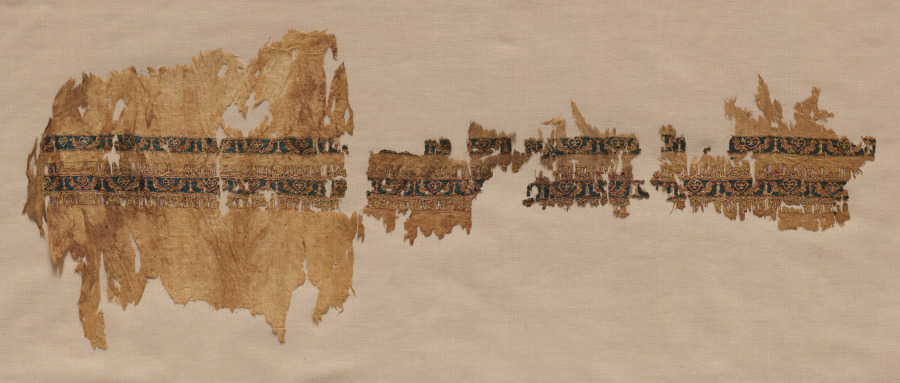
Tiraz with gold, probably from a wide sleeve (1013–1020) is in the Cleveland Museum of Art collection.
The work and its context
The museum's open-access catalogue describes the work:
This textile with expensive gold foil is among the rarest surviving examples among thousands of medieval textiles with historic or generic inscriptions in Arabic, known as tiraz. Tiraz were "emblems of dignity," the prerogative of sovereigns and those they wished to honor. This inscription is masterful. The tall letters are woven with silk thread on only two warps in slit-tapestry weave while the ground was woven with pure gold foil wrapped around a silk core that was not beaten in—to show off its brilliance. The text begins with a prayer and provides the name of Imam al-Hakim, but lacks the place and date of manufacture. The decorative bands feature brilliant gold birds facing simplified trees alternating with popular palmette-decorated hearts. This tiraz fragment may have been part of a wide sleeve that functioned as a receptacle because clothing didn’t have pockets.
Object facts
- Title: Tiraz with gold, probably from a wide sleeve
- Date: 1013–1020
- Culture: Egypt, Fatimid period, reign of Caliph al-Hakim, 1013–20
- Type: Textile
- Technique: plain weave with inwoven tapestry weave: linen, silk, and gold filé
- Dimensions: Overall: 23.5 x 62.3 cm (9 1/4 x 24 1/2 in.)
- Collection: T - Islamic
- Department: Textiles
- Accession number: 1950.549
Collection credit
John L. Severance Fund
Further reading listed by the museum
- Institut français d'archéologie orientale du Caire, Etienne Combe, Jean Sauvaget, et Gaston Wiet. Répertoire chronologique d'épigraphie arabe. Le Caire: Impr. de l'Institut français d'archéologie orientale, 1931.
- Wadsworth Atheneum, Adelyn Dohme Breeskin, and Charles Crehore Cunningham. 2000 Years of Tapestry Weaving: A Loan Exhibition : Wadsworth Atheneum, Hartford, Dec. 7, 1951 to Jan. 27, 1952 ; the Baltimore Museum of Art, Feb. 27, 1952 to Mar. 25, 1952. Hartford, Conn: Wardsworth Atheneum], 1951.
- Mackie, Louise W. Symbols of Power: Luxury Textiles from Islamic Lands, 7th-21st Century. Cleveland; New Haven: Cleveland Museum of Art; Yale University Press, 2015.
View the collection record
See the museum's photographs and full catalogue entry. Catalogue text is reproduced from the Cleveland Museum of Art's open-access data, with HTML formatting removed. This object and its supplied image are designated CC0.
Sources
More in Lifestyle
Keep reading