Tumbler (c. 1730): Art, History and Details
Tumbler at the Cleveland Museum of Art: c. 1730, zwischengoldglas (glass). Explore the work's context, creator attribution and collection history.
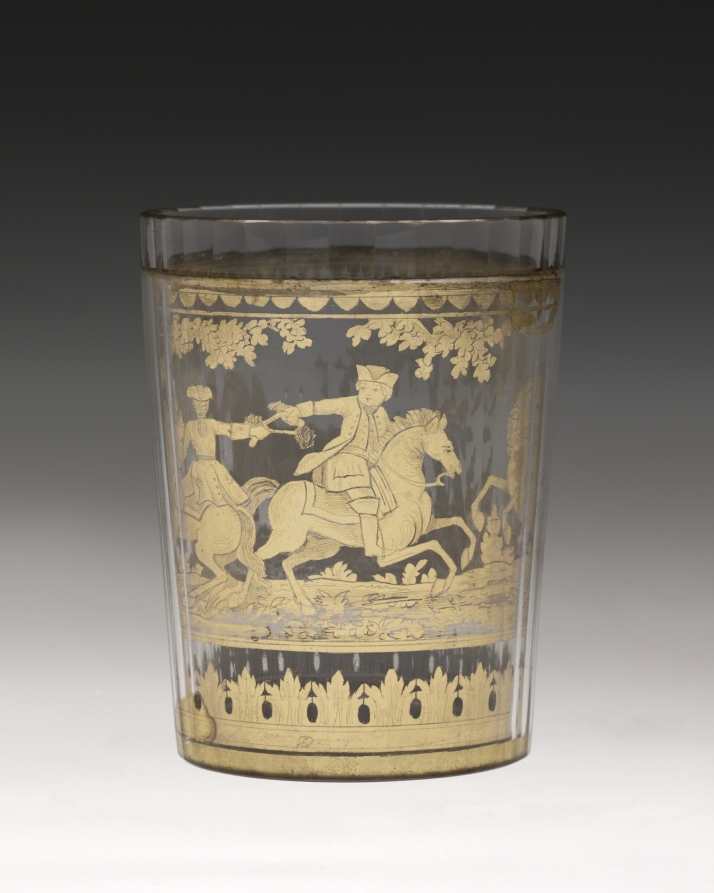
Tumbler (c. 1730) is in the Cleveland Museum of Art collection.
The work and its context
The museum's open-access catalogue describes the work:
Small beakers, or tumblers, were used to drink various types of spirits, cordials, and fortified wines, like sherry and port. “Gold between glass” (Zwischengoldglas) was a labor-intensive and costly technique practiced in Bohemia (present-day Czech Republic) and Austria in the 1700s. A gold-leaf design was affixed between two glass vessels that were then precisely fit together and fused. In this example, the gold leaf portrays a boisterous hunting scene. When the glass is tipped and emptied, the interior reveals that two hunting dogs have killed a hare.
Object facts
- Title: Tumbler
- Date: c. 1730
- Culture: Bohemia
- Type: Glass
- Technique: zwischengoldglas (glass)
- Dimensions: Diameter: 9 x 7.7 cm (3 9/16 x 3 1/16 in.)
- Collection: Decorative Arts
- Department: Decorative Art and Design
- Accession number: 1941.59
Collection credit
Twenty-fifth anniversary gift of Paul Drey
View the collection record
See the museum's photographs and full catalogue entry. Catalogue text is reproduced from the Cleveland Museum of Art's open-access data, with HTML formatting removed. This object and its supplied image are designated CC0.
Sources
More in Lifestyle
Keep reading