Wrapper (Lamba Akotifahana) (1860–90): Art, History and Details
Wrapper (Lamba Akotifahana) at the Cleveland Museum of Art: 1860–90, Silk and dye. Explore the work's context, creator attribution and collection history.
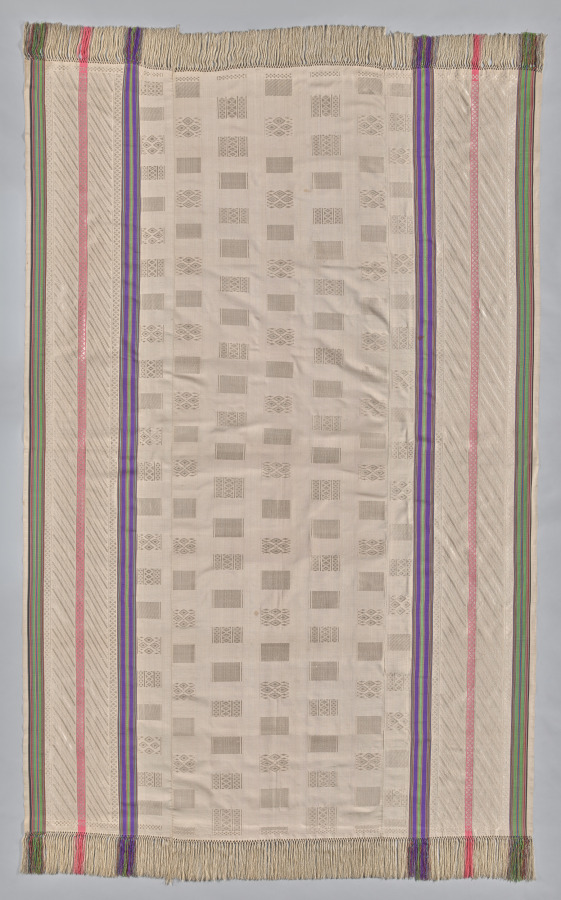
Wrapper (Lamba Akotifahana) (1860–90) is in the Cleveland Museum of Art collection.
The work and its context
The museum's open-access catalogue describes the work:
A lamba is an untailored textile worn by all ages, classes, and genders across much of Madagascar. Woven from shining Bombyx mori silk, the lamba akotifahana takes its name from the weft-float motifs (akotifahana) that adorn it. Once the color of commoners and the enslaved, when Christianity became the state religion in 1869, elite churchgoers preferred white silk lambas. The rows of knotted fringe reflect Malagasy taste for Chinese-made “Manila shawls.”
Object facts
- Title: Wrapper (Lamba Akotifahana)
- Date: 1860–90
- Culture: Unknown weaver (Madagascar, Merina Kingdom), Merina style
- Type: Textile
- Technique: Silk and dye
- Dimensions: Overall: 231 x 157 cm (90 15/16 x 61 13/16 in.)
- Collection: African Art
- Department: African Art
- Accession number: 2025.271
A detail from the museum
A shining lamba like this was wrapped around the shoulders over tailored clothing like a suit or dress.
Collection credit
Sundry Art - African Art Fund and Textile Fund
View the collection record
See the museum's photographs and full catalogue entry. Catalogue text is reproduced from the Cleveland Museum of Art's open-access data, with HTML formatting removed. This object and its supplied image are designated CC0.
Sources
More in Lifestyle
Keep reading