Net Worth →

Art & Design archive — Page 337

Oldest entries first, in a fixed order. Newly added articles appear at the end. Explore a shuffled selection →

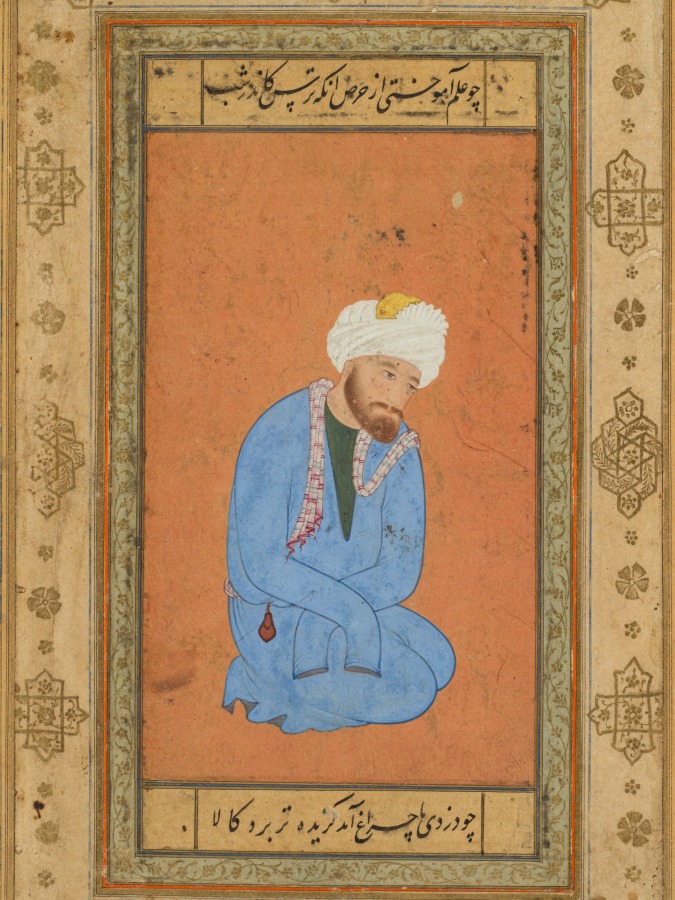
Portrait of a kneeling holy man, from the Prince Salim Album (c. 1556–60; border c. 1602; Cleveland 2013.295)

Portrait of a kneeling holy man, from the Prince Salim Album (c. 1556–60; border c. 1602): Art, History and Details

Portrait of a kneeling holy man, from the Prince Salim Album at the Cleveland Museum of Art: c. 1556–60; border c. 1602, Gum tempera, ink, and gold on paper, laid down on an album page with cream borders decorated with gold flowers and geom
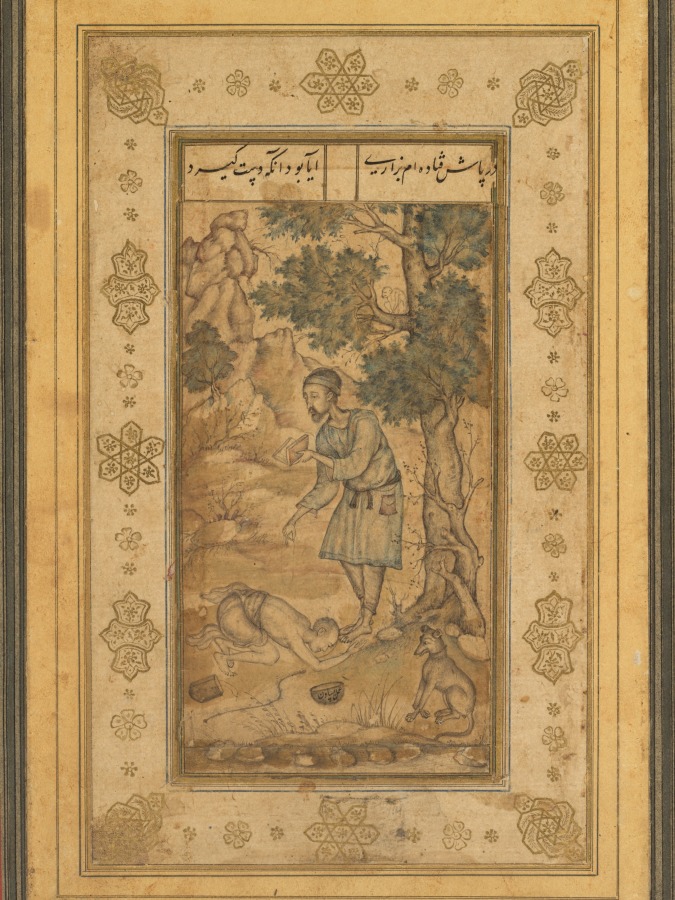
A mendicant bowing before a holy man, from the Prince Salim Album (c. 1585; inner border added in Allahabad c. 1602; outer border added probably 1900s; Cleveland 2013.296)
A mendicant bowing before a holy man, from the Prince Salim Album (c. 1585; inner border added in Allahabad c. 1602; outer border added probably 1900s): Art, History and Details

A mendicant bowing before a holy man, from the Prince Salim Album at the Cleveland Museum of Art: c. 1585; inner border added in Allahabad c. 1602; outer border added probably 1900s, Gum tempera, ink, and gold on paper. Explore the work's c

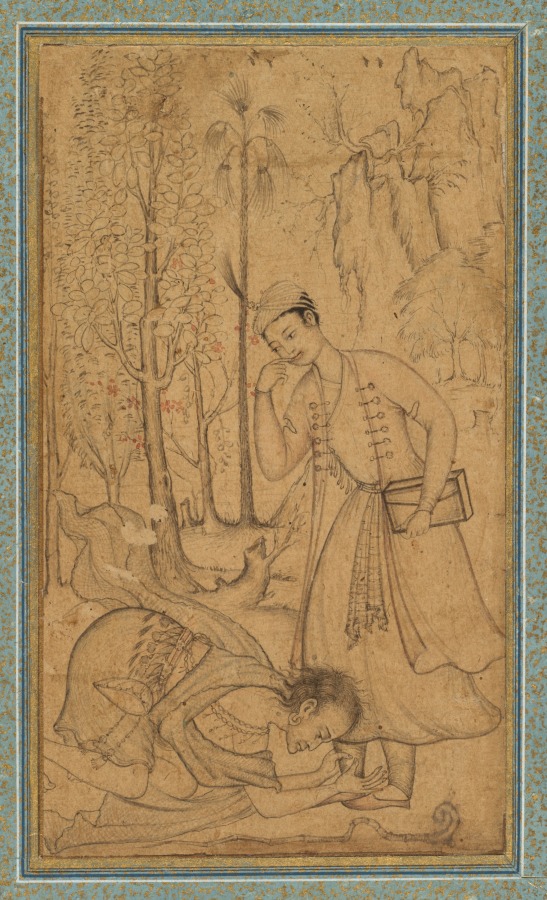
A holy man prostrating himself before a learned prince (c. 1585; border added probably 1700s; Cleveland 2013.297)

A holy man prostrating himself before a learned prince (c. 1585; border added probably 1700s): Art, History and Details

A holy man prostrating himself before a learned prince at the Cleveland Museum of Art: c. 1585; border added probably 1700s, ink on paper, laid down with borders of gold-decorated blue paper. Explore the work's context, creator attribution

A royal ram with a gold chain (c. 1585; border added probably 1700s; Cleveland 2013.298)

A royal ram with a gold chain (c. 1585; border added probably 1700s): Art, History and Details

A royal ram with a gold chain at the Cleveland Museum of Art: c. 1585; border added probably 1700s, Gum tempera and gold on paper. Explore the work's context, creator attribution and collection history.

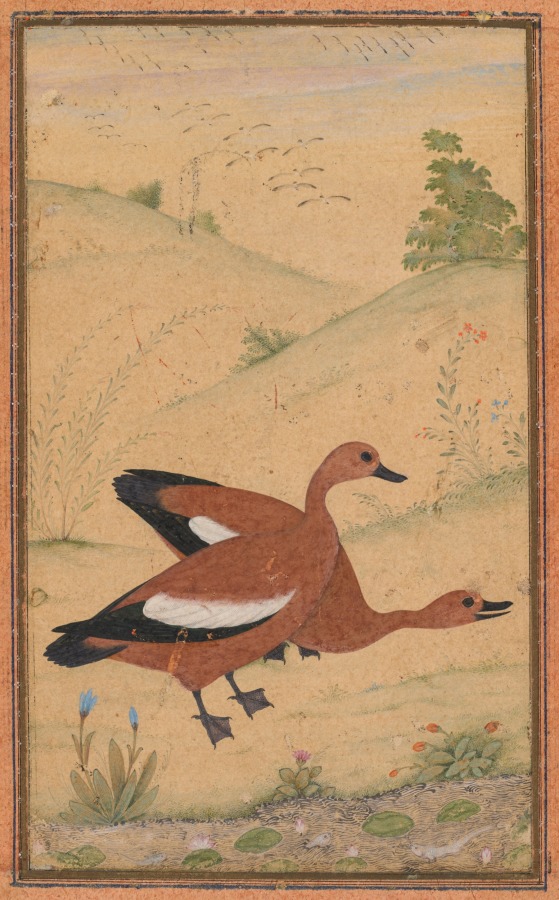
A pair of Brahminy ducks (c. 1595; borders added probably 1800s; Cleveland 2013.299)

A pair of Brahminy ducks (c. 1595; borders added probably 1800s): Art, History and Details

A pair of Brahminy ducks at the Cleveland Museum of Art: c. 1595; borders added probably 1800s, Gum tempera on paper, mounted with later pink and blue borders. Explore the work's context, creator attribution and collection history.

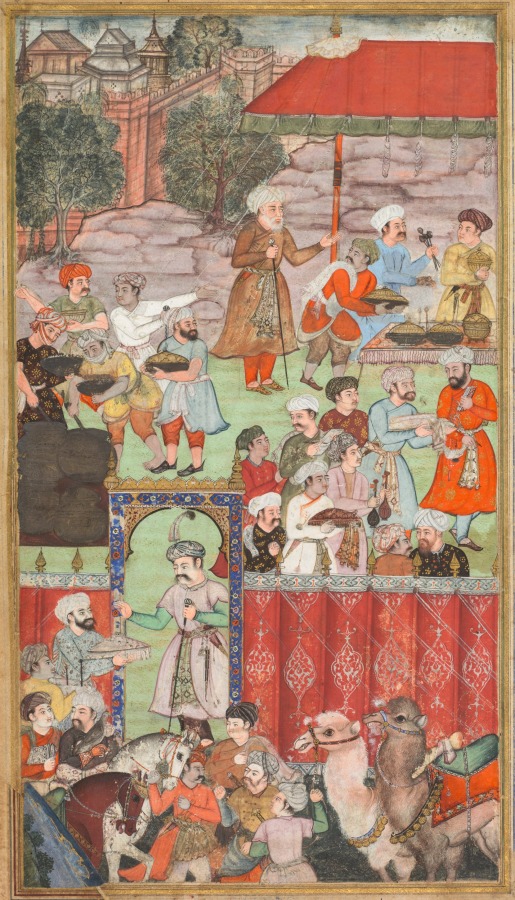
A feast for Babur hosted by his half-brother Jahangir Mirza in Ghazni in May 1505, from a Babur-nama (Memoirs of Babur) (c. 1589; outer margins added c. mid-1900s; Cleveland 2013.300)

A feast for Babur hosted by his half-brother Jahangir Mirza in Ghazni in May 1505, from a Babur-nama (Memoirs of Babur) (c. 1589; outer margins added c. mid-1900s): Art, History and Details

A feast for Babur hosted by his half-brother Jahangir Mirza in Ghazni in May 1505, from a Babur-nama (Memoirs of Babur) at the Cleveland Museum of Art: c. 1589; outer margins added c. mid-1900s, Gum tempera and gold on paper. Explore the wo

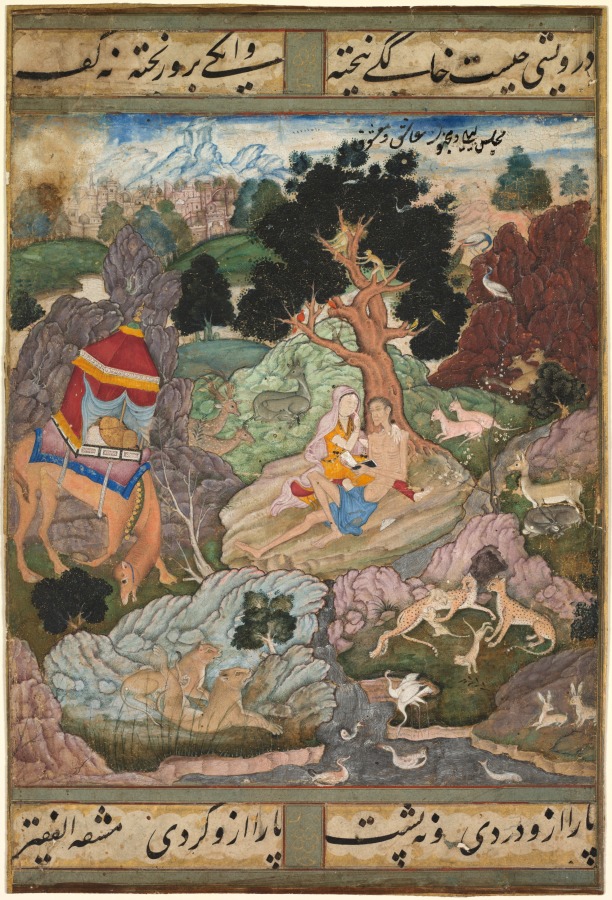
Layla and Majnun in the wilderness with animals, from a Khamsa (Quintet) of Amir Khusrau Dihlavi (c. 1590–1600; Cleveland 2013.301)

Layla and Majnun in the wilderness with animals, from a Khamsa (Quintet) of Amir Khusrau Dihlavi (c. 1590–1600): Art, History and Details

Layla and Majnun in the wilderness with animals, from a Khamsa (Quintet) of Amir Khusrau Dihlavi at the Cleveland Museum of Art: c. 1590–1600, Gum tempera, ink, and gold on paper. Explore the work's context, creator attribution and collecti

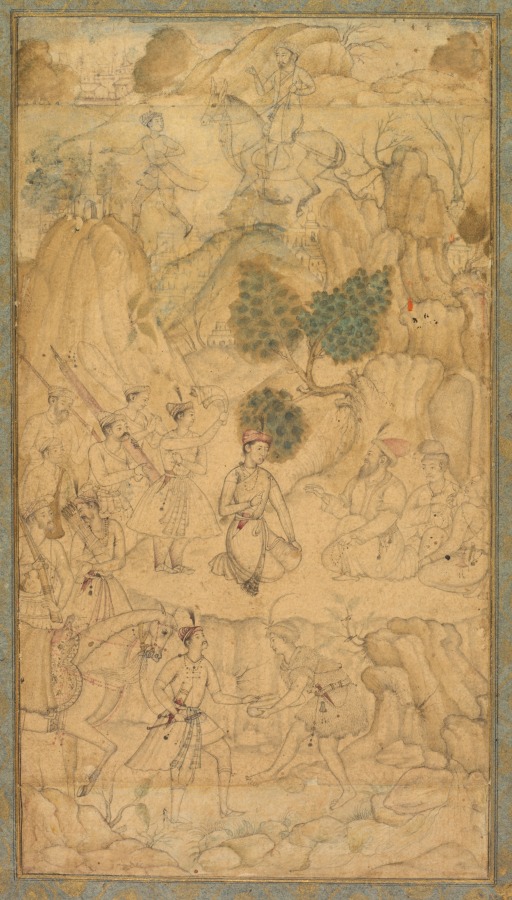
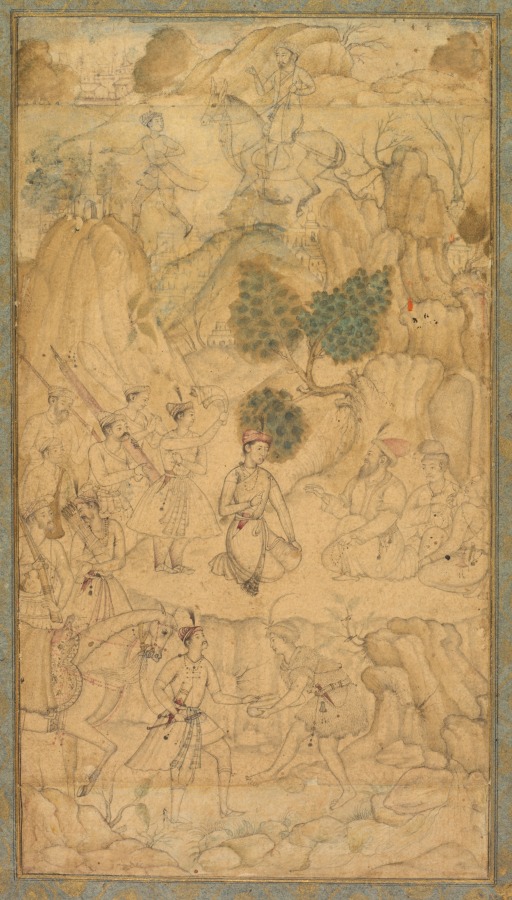
A prince visiting a holy man in a rocky landscape (c. 1590; Cleveland 2013.302)

A prince visiting a holy man in a rocky landscape (c. 1590): Art, History and Details

A prince visiting a holy man in a rocky landscape at the Cleveland Museum of Art: c. 1590, Gum tempera and gold on paper. Explore the work's context, creator attribution and collection history.

A Prince Visiting a Holy Man in a Rocky Landscape (recto) (c. 1590; Cleveland 2013.302.a)

A Prince Visiting a Holy Man in a Rocky Landscape (recto) (c. 1590): Art, History and Details

A Prince Visiting a Holy Man in a Rocky Landscape (recto) at the Cleveland Museum of Art: c. 1590, Gum tempera, ink, and gold on paper. Explore the work's context, creator attribution and collection history.

Lovers parting, page from a book of fables (c. 1590–95; Cleveland 2013.303)

Lovers parting, page from a book of fables (c. 1590–95): Art, History and Details

Lovers parting, page from a book of fables at the Cleveland Museum of Art: c. 1590–95, Gum tempera, ink, and gold on paper. Explore the work's context, creator attribution and collection history.

Lovers Parting, Page from a Book of Fables (c. 1590–95; Cleveland 2013.303.a)

Lovers Parting, Page from a Book of Fables (c. 1590–95): Art, History and Details

Lovers Parting, Page from a Book of Fables at the Cleveland Museum of Art: c. 1590–95, Gum tempera and gold on paper. Explore the work's context, creator attribution and collection history.

Calligraphy: Preface to the Anvar-i Suhaili (c. 1590; Cleveland 2013.303.b)

Calligraphy: Preface to the Anvar-i Suhaili (c. 1590): Art, History and Details

Calligraphy: Preface to the Anvar-i Suhaili at the Cleveland Museum of Art: c. 1590, Gum tempera, ink, and gold on paper. Explore the work's context, creator attribution and collection history.

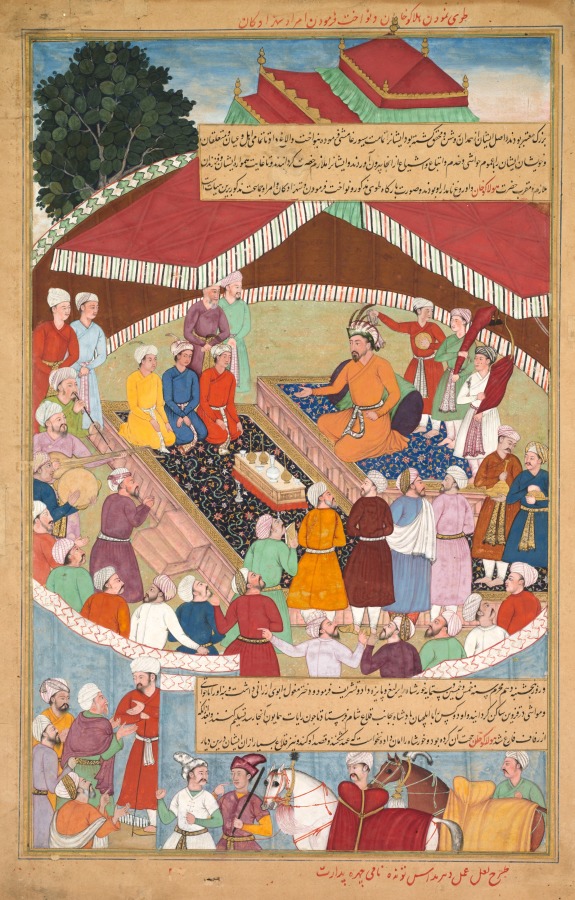
Hulagu Khan giving a feast and dispensing favor upon the amirs and princes, from a Chingiz-nama (Book of Chingiz Khan) of the Jami al-tavarikh (Compendium of Chronicles) (c. 1596–1600; Cleveland 2013.304)

Hulagu Khan giving a feast and dispensing favor upon the amirs and princes, from a Chingiz-nama (Book of Chingiz Khan) of the Jami al-tavarikh (Compendium of Chronicles) (c. 1596–1600): Art, History a

Hulagu Khan giving a feast and dispensing favor upon the amirs and princes, from a Chingiz-nama (Book of Chingiz Khan) of the Jami al-tavarikh (Compendium of Chronicles) at the Cleveland Museum of Art: c. 1596–1600, Gum tempera, ink, and go

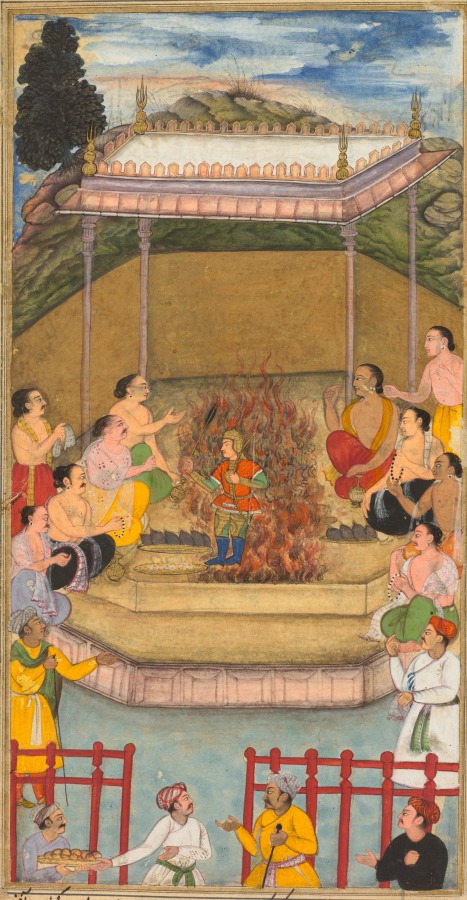
Yaja and Upayaja perform a sacrifice for the emergence of Dhrishtadyumna from the fire, from Adi-parva (volume one) of the Razm-nama (Book of Wars) adapted and translated into Persian by Mir Ghiyath al-Din Ali Qazvini, known as Naqib Khan (Persian, d. 1614) from the Sanskrit Mahabharata (1598; Cleveland 2013.305)

Yaja and Upayaja perform a sacrifice for the emergence of Dhrishtadyumna from the fire, from Adi-parva (volume one) of the Razm-nama (Book of Wars) adapted and translated into Persian by Mir Ghiyath a

Yaja and Upayaja perform a sacrifice for the emergence of Dhrishtadyumna from the fire, from Adi-parva (volume one) of the Razm-nama (Book of Wars) adapted and translated into Persian by Mir Ghiyath al-Din Ali Qazvini, known as Naqib Khan (

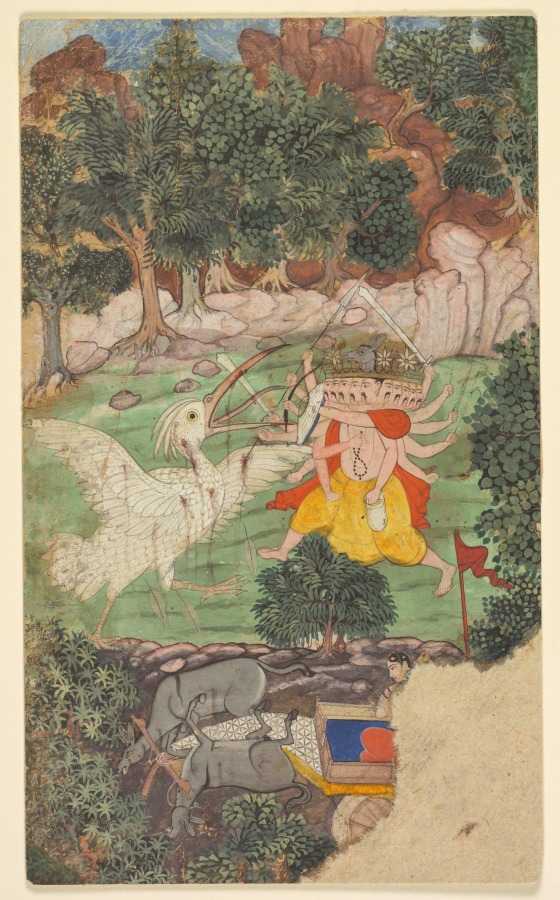
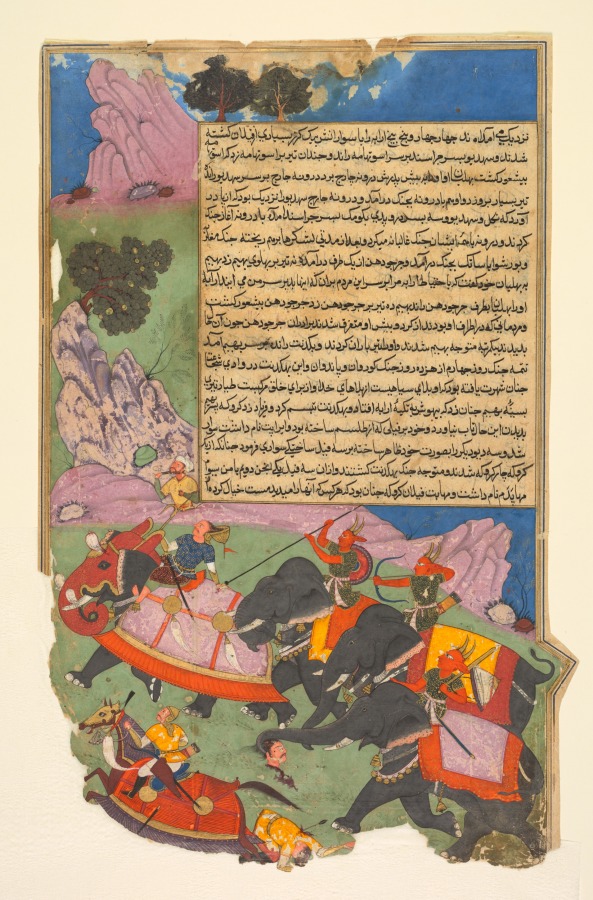
Battle of Ravana and Jatayu, from Chapters 50 and 51 of the Aranya Kanda (Book of the Forest) of Valmiki's Ramayana (Rama’s Journey); folio from the "Burnt" Ramayana (c. 1605; Cleveland 2013.306)

Battle of Ravana and Jatayu, from Chapters 50 and 51 of the Aranya Kanda (Book of the Forest) of Valmiki's Ramayana (Rama’s Journey); folio from the "Burnt" Ramayana (c. 1605): Art, History and Detail

Battle of Ravana and Jatayu, from Chapters 50 and 51 of the Aranya Kanda (Book of the Forest) of Valmiki's Ramayana (Rama’s Journey); folio from the "Burnt" Ramayana at the Cleveland Museum of Art: c. 1605, Gum tempera and ink on paper. Exp

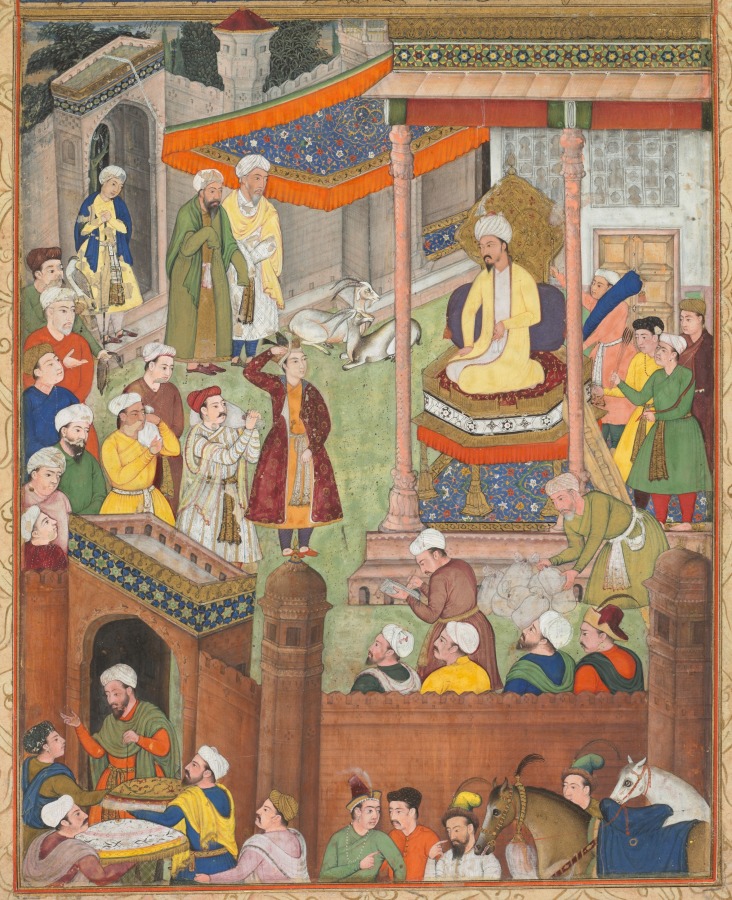
Babur receives booty and Humayun’s salute after the victory over Sultan Ibrahim in 1526, from an Akbar-nama (Book of Akbar) of Abu’l Fazl (Indian, 1551–1602) (c. 1596–1597 or 1604; Cleveland 2013.308)

Babur receives booty and Humayun’s salute after the victory over Sultan Ibrahim in 1526, from an Akbar-nama (Book of Akbar) of Abu’l Fazl (Indian, 1551–1602) (c. 1596–1597 or 1604): Art, History and D

Babur receives booty and Humayun’s salute after the victory over Sultan Ibrahim in 1526, from an Akbar-nama (Book of Akbar) of Abu’l Fazl (Indian, 1551–1602) at the Cleveland Museum of Art: c. 1596–1597 or 1604, Gum tempera and gold on pape

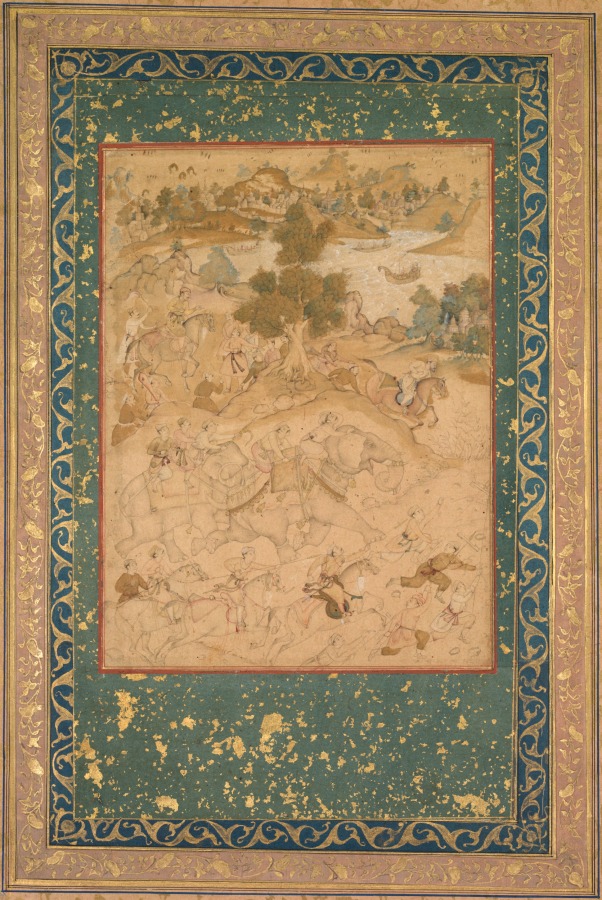
Akbar supervising the capture of wild elephants at Malwa in 1564, painting 90 from an Akbar-nama (Book of Akbar) of Abu’l Fazl (Indian 1551–1602) (c. 1602–3; borders added c. 1700s; Cleveland 2013.309)

Akbar supervising the capture of wild elephants at Malwa in 1564, painting 90 from an Akbar-nama (Book of Akbar) of Abu’l Fazl (Indian 1551–1602) (c. 1602–3; borders added c. 1700s): Art, History and

Akbar supervising the capture of wild elephants at Malwa in 1564, painting 90 from an Akbar-nama (Book of Akbar) of Abu’l Fazl (Indian 1551–1602) at the Cleveland Museum of Art: c. 1602–3; borders added c. 1700s, ink with use of colors and

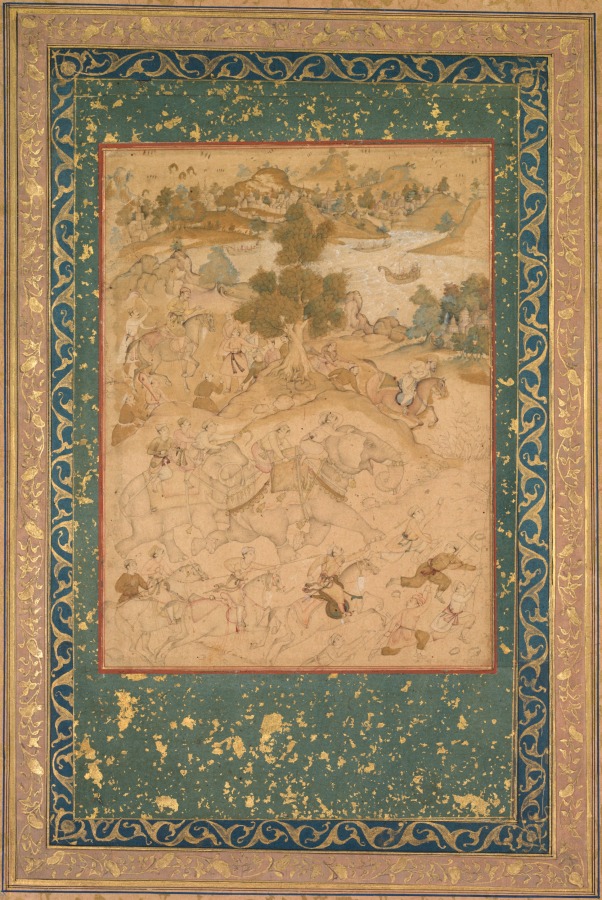
Akbar supervising the capture of wild elephants at Malwa in 1564, painting 90 from an Akbar-nama (Book of Akbar) of Abu’l Fazl (Indian 1551–1602) (c. 1602–3; borders added c. 1700s; Cleveland 2013.309.a)

Akbar supervising the capture of wild elephants at Malwa in 1564, painting 90 from an Akbar-nama (Book of Akbar) of Abu’l Fazl (Indian 1551–1602) (c. 1602–3; borders added c. 1700s): Art, History and

Akbar supervising the capture of wild elephants at Malwa in 1564, painting 90 from an Akbar-nama (Book of Akbar) of Abu’l Fazl (Indian 1551–1602) at the Cleveland Museum of Art: c. 1602–3; borders added c. 1700s, ink with use of colors and

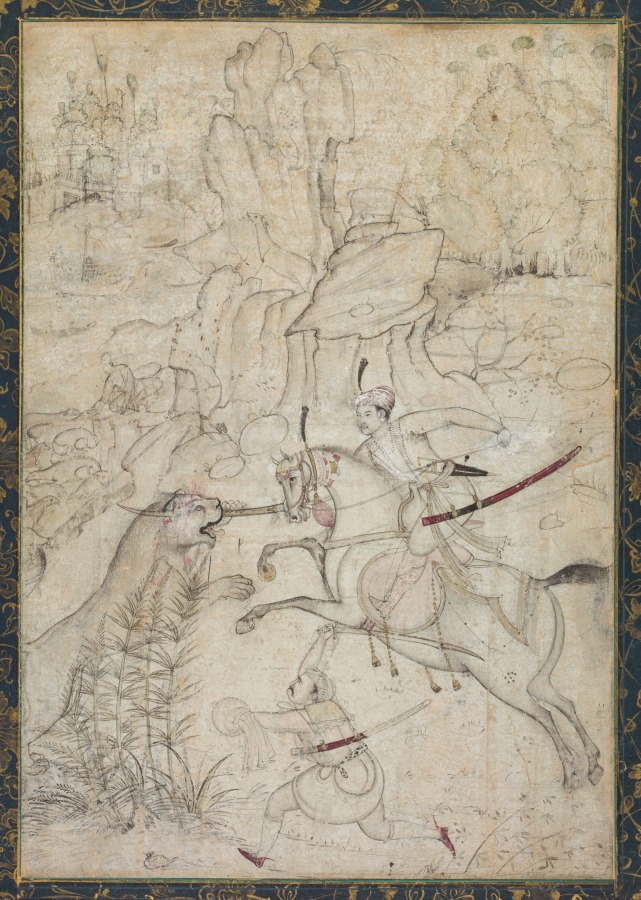
A Mounted Prince Hunting Lion in a Rocky Landscape (c. 1600; Cleveland 2013.310)

A Mounted Prince Hunting Lion in a Rocky Landscape (c. 1600): Art, History and Details

A Mounted Prince Hunting Lion in a Rocky Landscape at the Cleveland Museum of Art: c. 1600, Gum tempera, ink, and gold on paper. Explore the work's context, creator attribution and collection history.

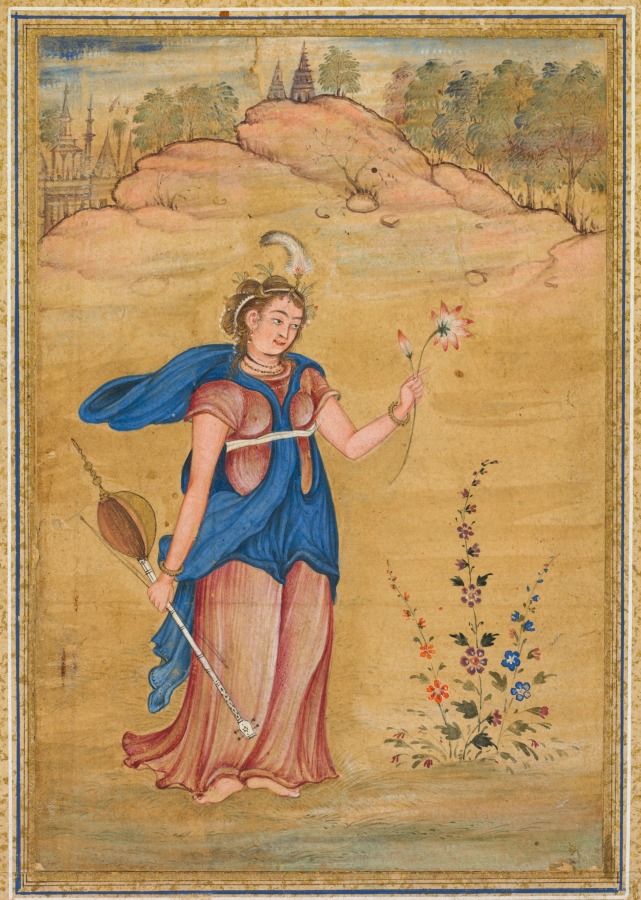
A female figure standing in a landscape holding a four-stringed “khuuchir” and a lotus (c. 1590; Cleveland 2013.311)

A female figure standing in a landscape holding a four-stringed “khuuchir” and a lotus (c. 1590): Art, History and Details

A female figure standing in a landscape holding a four-stringed “khuuchir” and a lotus at the Cleveland Museum of Art: c. 1590, Gum tempera and gold on paper. Explore the work's context, creator attribution and collection history.

The Holy Family (c. 1620s; Cleveland 2013.312)

The Holy Family (c. 1620s): Art, History and Details

The Holy Family at the Cleveland Museum of Art: c. 1620s, Gum tempera and gold on paper. Explore the work's context, creator attribution and collection history.

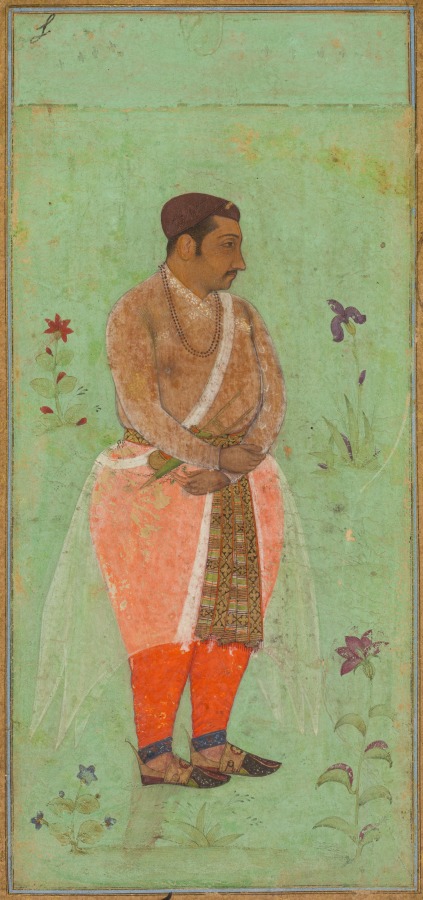
Portrait of Suraj Singh Rathor, Raja of Marwar and Maternal Uncle of Shah Jahan: A Page from the Prince Khurram Album (c. 1600; Cleveland 2013.313)

Portrait of Suraj Singh Rathor, Raja of Marwar and Maternal Uncle of Shah Jahan: A Page from the Prince Khurram Album (c. 1600): Art, History and Details

Portrait of Suraj Singh Rathor, Raja of Marwar and Maternal Uncle of Shah Jahan: A Page from the Prince Khurram Album at the Cleveland Museum of Art: c. 1600, Gum tempera and gold on paper. Explore the work's context, creator attribution an

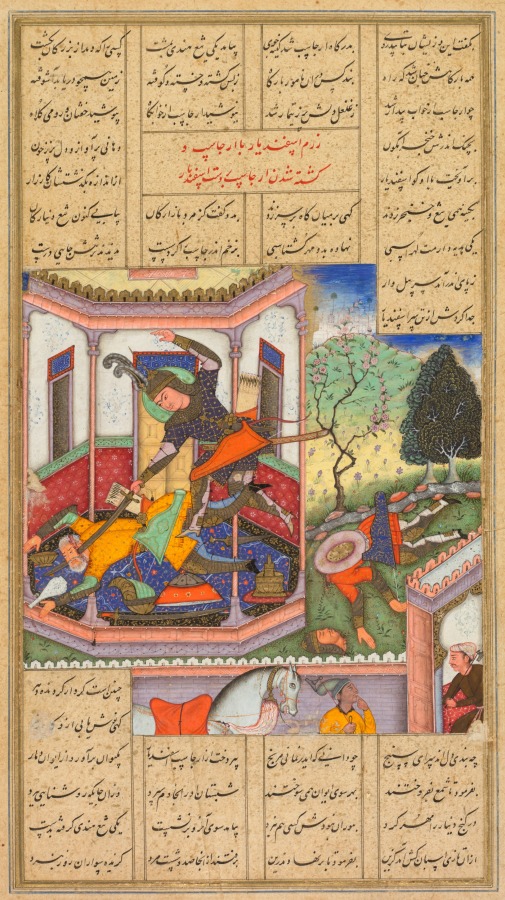
Isfandiyar slays Arjasp, the king of Turan, from a Shah-nama (Book of Kings) of Firdausi (Persian, about 934–1020) (1600–1605; Cleveland 2013.314)

Isfandiyar slays Arjasp, the king of Turan, from a Shah-nama (Book of Kings) of Firdausi (Persian, about 934–1020) (1600–1605): Art, History and Details

Isfandiyar slays Arjasp, the king of Turan, from a Shah-nama (Book of Kings) of Firdausi (Persian, about 934–1020) at the Cleveland Museum of Art: 1600–1605, Gum tempera, ink, and gold on paper. Explore the work's context, creator attributi

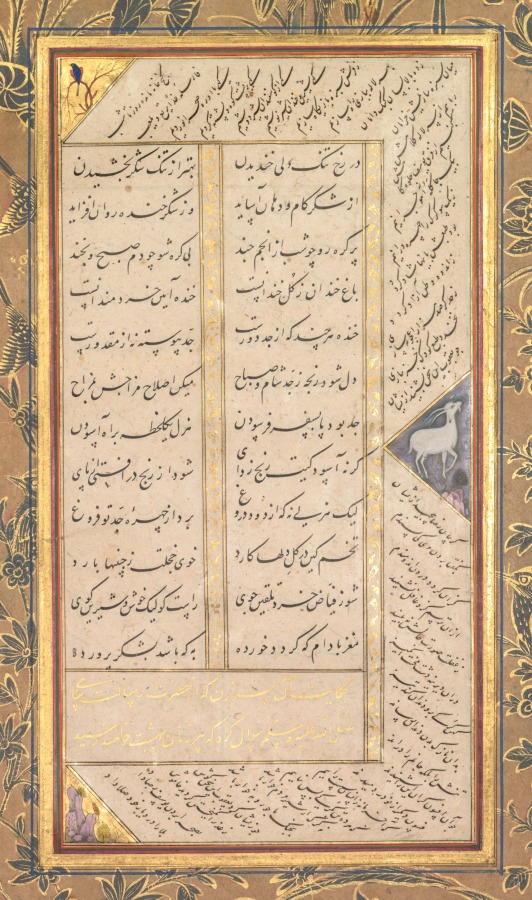
Folios A and B from the "Five Treasures" (Panj Ganj) of Jami (1520–1607; Cleveland 2013.315)

Folios A and B from the "Five Treasures" (Panj Ganj) of Jami (1520–1607): Art, History and Details

Folios A and B from the "Five Treasures" (Panj Ganj) of Jami at the Cleveland Museum of Art: 1520–1607, Gum tempera, ink, and gold on paper. Explore the work's context, creator attribution and collection history.

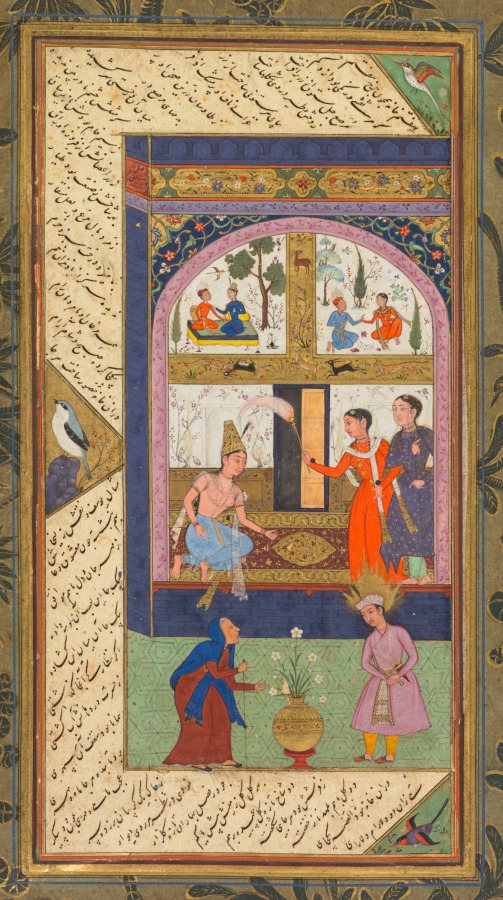
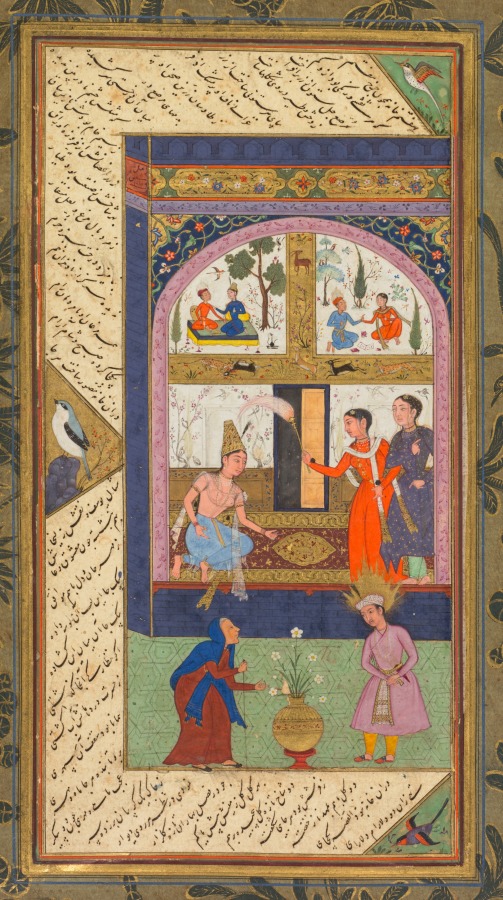
Zulaykha in her palace and as an old woman with Joseph, from a Panj Ganj (Five Treasures) of Abd al-Rahman Jami (Persian, 1414–1492); verso from a Panj Ganj of Abd al-Rahman Jami (Persian, 1414–1492), with two masnavis: Yusuf va Zulaykha (Joseph and Zulaykha) and Khirad-nama-i Iskandari (Alexander’s Book of Wisdom) (Text copied by Sultan-Ali Mashhadi (Persian, 1453–1520) for Badi al-Zaman Mirza of Herat Painting, borders, and illumination by Mushfiq (Indian, active 1580s–early 1600s); Text copied in Herat; Painting, borders, and illuminations made in the Deccan for Mughal minister Abd al-Rahim the Khan Khanan; Cleveland 2013.315.1)

Zulaykha in her palace and as an old woman with Joseph, from a Panj Ganj (Five Treasures) of Abd al-Rahman Jami (Persian, 1414–1492); verso from a Panj Ganj of Abd al-Rahman Jami (Persian, 1414–1492),

Zulaykha in her palace and as an old woman with Joseph, from a Panj Ganj (Five Treasures) of Abd al-Rahman Jami (Persian, 1414–1492); verso from a Panj Ganj of Abd al-Rahman Jami (Persian, 1414–1492), with two masnavis: Yusuf va Zulaykha (J

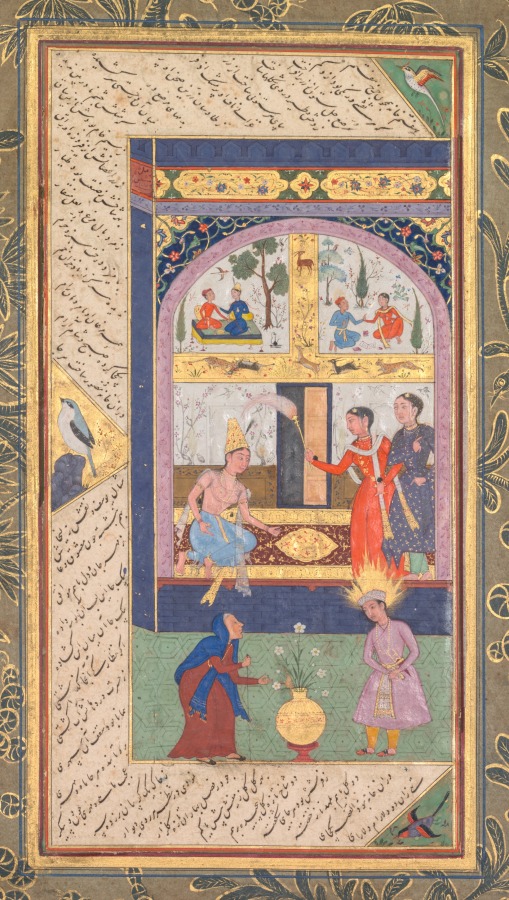
Zulaykha in her palace and as an elderly woman with Joseph (recto), from a Panj Ganj (Five Treasures) of Abd al- Rahman Jami (Persian, 1414–1492) (1603–7; Cleveland 2013.315.1.a)

Zulaykha in her palace and as an elderly woman with Joseph (recto), from a Panj Ganj (Five Treasures) of Abd al- Rahman Jami (Persian, 1414–1492) (1603–7): Art, History and Details

Zulaykha in her palace and as an elderly woman with Joseph (recto), from a Panj Ganj (Five Treasures) of Abd al- Rahman Jami (Persian, 1414–1492) at the Cleveland Museum of Art: 1603–7, Gum tempera, ink, and gold on paper. Explore the work'

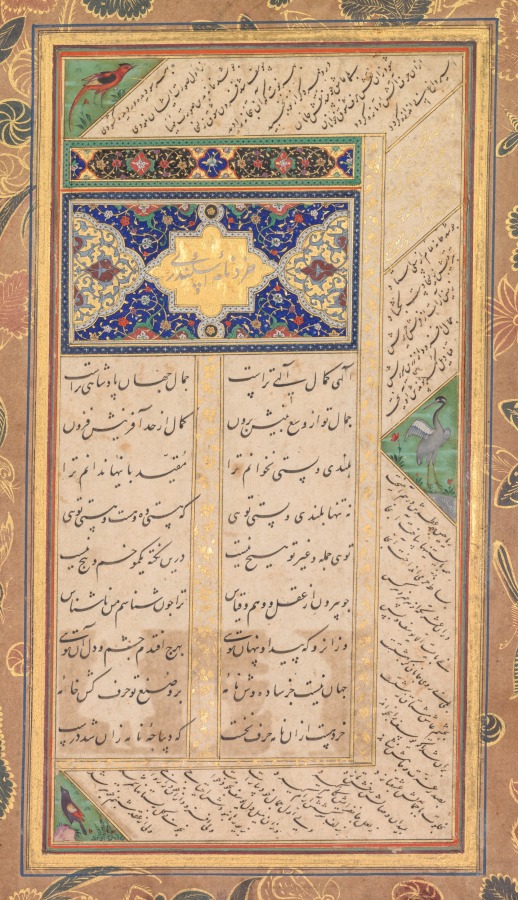
Illuminated page (verso), from a Panj Ganj (Five Treasures) of Abd al- Rahman Jami (Persian, 1414–1492) with two Persian masnavis: Yusuf va Zulaykha (Joseph and Zulaykha) and Khirad-nama-i Iskandari (Alexander’s Book of Wisdom) (1603–7; Cleveland 2013.315.1.b)

Illuminated page (verso), from a Panj Ganj (Five Treasures) of Abd al- Rahman Jami (Persian, 1414–1492) with two Persian masnavis: Yusuf va Zulaykha (Joseph and Zulaykha) and Khirad-nama-i Iskandari (

Illuminated page (verso), from a Panj Ganj (Five Treasures) of Abd al- Rahman Jami (Persian, 1414–1492) with two Persian masnavis: Yusuf va Zulaykha (Joseph and Zulaykha) and Khirad-nama-i Iskandari (Alexander’s Book of Wisdom) at the Cleve

Page from the Panj Ganj (Five Treasures) of Abd al-Rahman Jami (Persian, 1414–1492), with two Persian masnavis (narrative poems): Yusuf va Zulaykha (Joseph and Zulaykha) and Subhat al-abrar (Rosary of the Righteous) (Text c. 1500–1520; painting, borders, and illuminations added 1603–7 Text copied by Sultan-Ali Mashhadi (Persian, active early 1500s) for Badi al-Zaman Mirza, ruler of Herat Painted insets and borders by Mushfiq (Indian, active 1580s–early 1600s) Text copied in Herat Painting, borders, and illuminations made in the Deccan for Mughal minister Abd al-Rahim the Khan Khanan; Cleveland 2013.315.2)

Page from the Panj Ganj (Five Treasures) of Abd al-Rahman Jami (Persian, 1414–1492), with two Persian masnavis (narrative poems): Yusuf va Zulaykha (Joseph and Zulaykha) and Subhat al-abrar (Rosary of

Page from the Panj Ganj (Five Treasures) of Abd al-Rahman Jami (Persian, 1414–1492), with two Persian masnavis (narrative poems): Yusuf va Zulaykha (Joseph and Zulaykha) and Subhat al-abrar (Rosary of the Righteous) at the Cleveland Museum

Folio B: Folio from the "Five Treasures" (Panj Ganj) of Jami (recto) (1520–1607; Cleveland 2013.315.2.a)

Folio B: Folio from the "Five Treasures" (Panj Ganj) of Jami (recto) (1520–1607): Art, History and Details

Folio B: Folio from the "Five Treasures" (Panj Ganj) of Jami (recto) at the Cleveland Museum of Art: 1520–1607, Gum tempera, ink, and gold on paper. Explore the work's context, creator attribution and collection history.

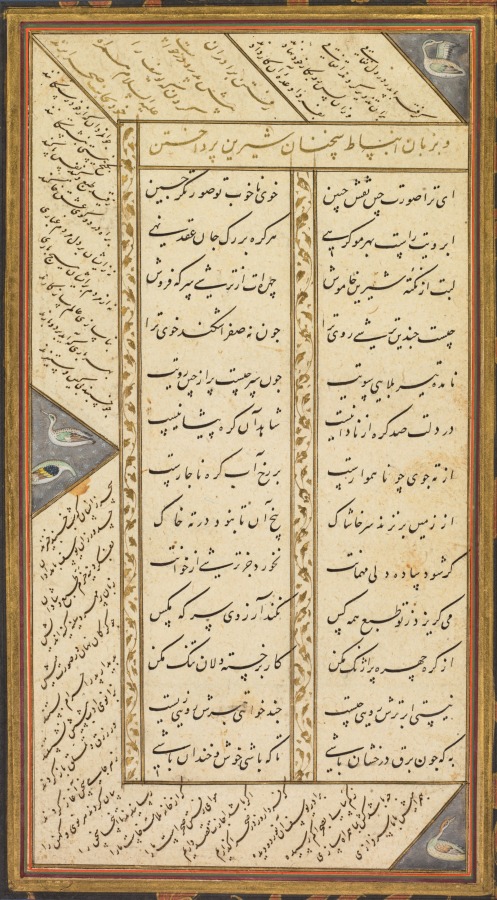
Page from a Panj Ganj (Five Treasures) of Abd al-Rahman Jami (Persian, 1414–1492), with two Persian masnavis: Yusuf va Zulaykha (Joseph and Zulaykha) and Subhat al-abrar (Rosary of the Righteous) (verso) (1520–1607; Cleveland 2013.315.2.b)

Page from a Panj Ganj (Five Treasures) of Abd al-Rahman Jami (Persian, 1414–1492), with two Persian masnavis: Yusuf va Zulaykha (Joseph and Zulaykha) and Subhat al-abrar (Rosary of the Righteous) (ver

Page from a Panj Ganj (Five Treasures) of Abd al-Rahman Jami (Persian, 1414–1492), with two Persian masnavis: Yusuf va Zulaykha (Joseph and Zulaykha) and Subhat al-abrar (Rosary of the Righteous) (verso) at the Cleveland Museum of Art: 1520

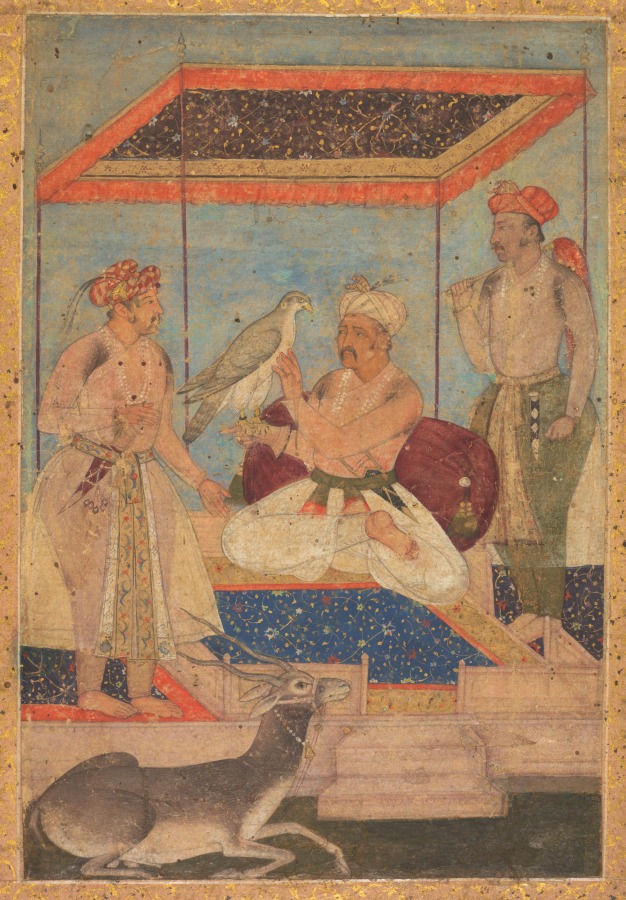
Akbar and Jahangir Examine a Ghir Falcon while Prince Khusrau Stands Behind (c. 1602–4; Cleveland 2013.317)

Akbar and Jahangir Examine a Ghir Falcon while Prince Khusrau Stands Behind (c. 1602–4): Art, History and Details

Akbar and Jahangir Examine a Ghir Falcon while Prince Khusrau Stands Behind at the Cleveland Museum of Art: c. 1602–4, gum tempera and gold on paper. Explore the work's context, creator attribution and collection history.

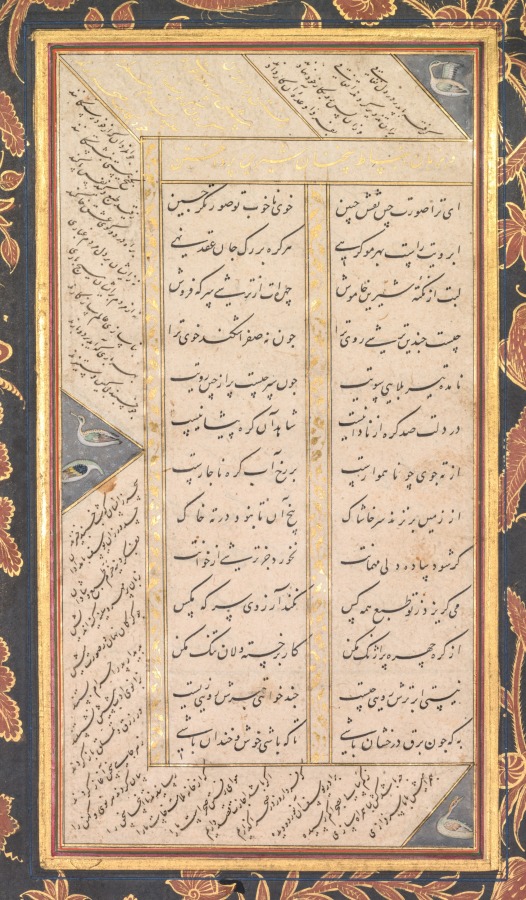
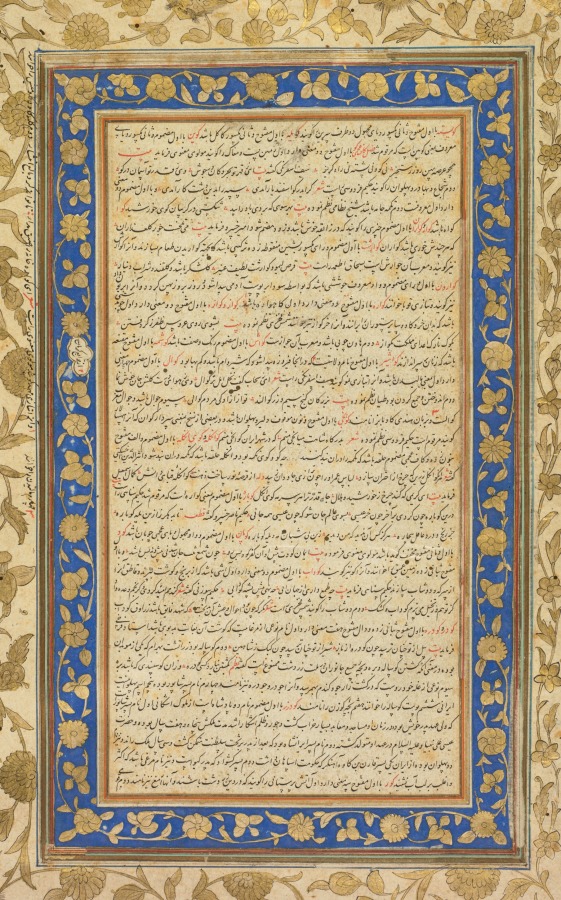
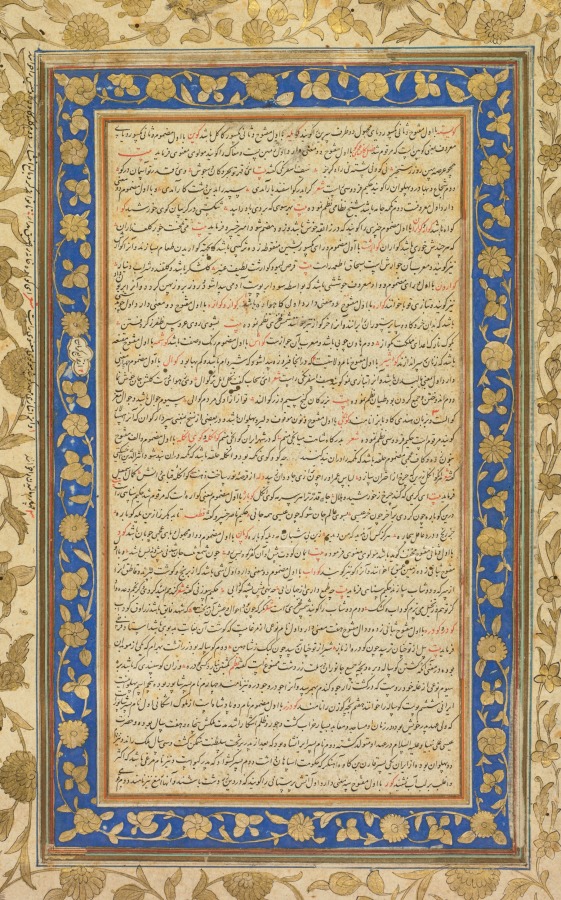
From the Farhang-i Jahangiri (Persian-language Dictionary) compiled by Mir Jamal al-Din Husayn Inju of Shiraz (Persian, d. 1626) (1607–8; Cleveland 2013.318)

From the Farhang-i Jahangiri (Persian-language Dictionary) compiled by Mir Jamal al-Din Husayn Inju of Shiraz (Persian, d. 1626) (1607–8): Art, History and Details

From the Farhang-i Jahangiri (Persian-language Dictionary) compiled by Mir Jamal al-Din Husayn Inju of Shiraz (Persian, d. 1626) at the Cleveland Museum of Art: 1607–8, Gum tempera, ink, and gold on paper. Explore the work's context, creato

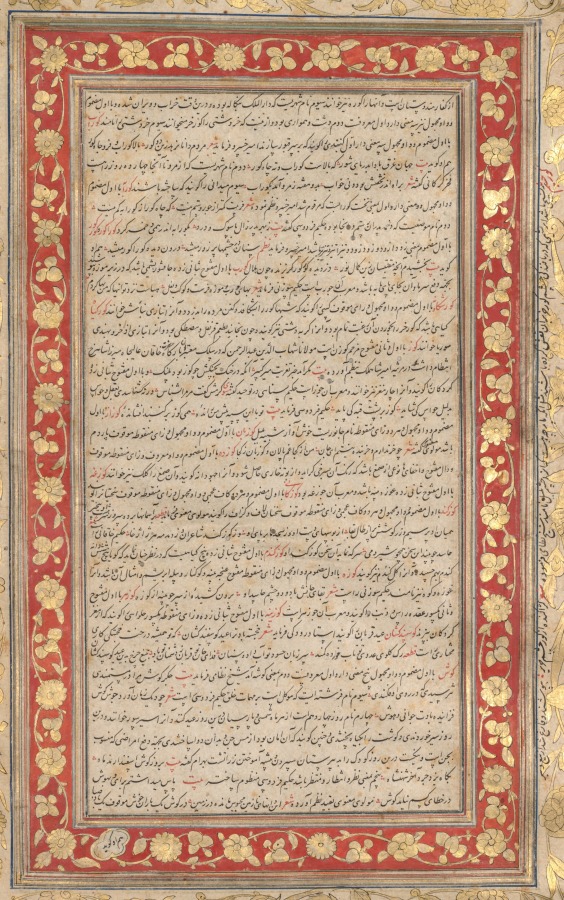
An Illuminated Folio from the Royal Manuscript of the Farhang-i Jahangiri (recto) (1607–8; Cleveland 2013.318.a)

An Illuminated Folio from the Royal Manuscript of the Farhang-i Jahangiri (recto) (1607–8): Art, History and Details

An Illuminated Folio from the Royal Manuscript of the Farhang-i Jahangiri (recto) at the Cleveland Museum of Art: 1607–8, Gum tempera, ink, and gold on paper. Explore the work's context, creator attribution and collection history.

An Illuminated Folio from the Royal Manuscript of the Farhang-i Jahangiri (verso) (1607–8; Cleveland 2013.318.b)

An Illuminated Folio from the Royal Manuscript of the Farhang-i Jahangiri (verso) (1607–8): Art, History and Details

An Illuminated Folio from the Royal Manuscript of the Farhang-i Jahangiri (verso) at the Cleveland Museum of Art: 1607–8, Gum tempera, ink, and gold on paper. Explore the work's context, creator attribution and collection history.

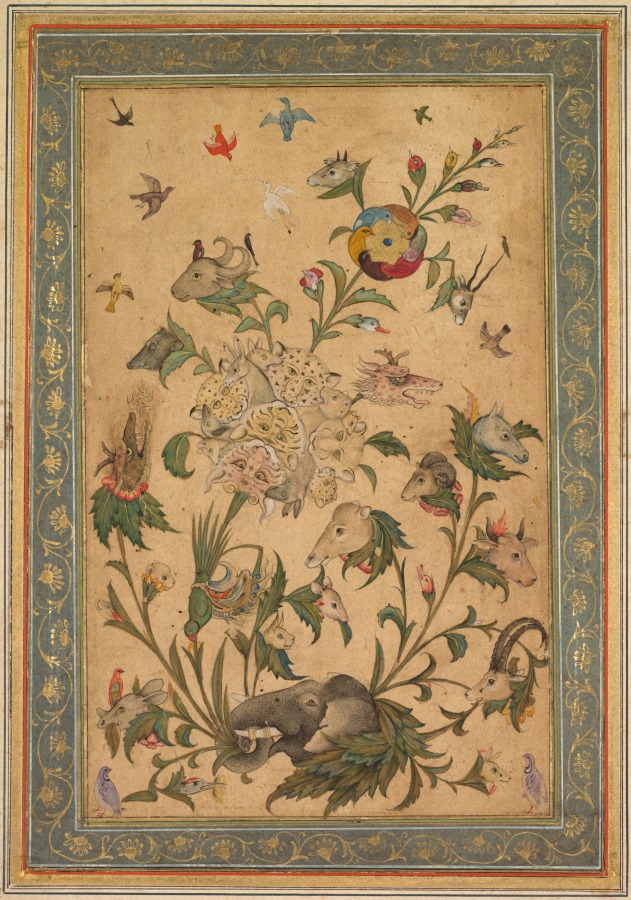
A floral fantasy of animals and birds (Waq-waq) (early 1600s; Cleveland 2013.319)

A floral fantasy of animals and birds (Waq-waq) (early 1600s): Art, History and Details

A floral fantasy of animals and birds (Waq-waq) at the Cleveland Museum of Art: early 1600s, Gum tempera and gold on paper. Explore the work's context, creator attribution and collection history.

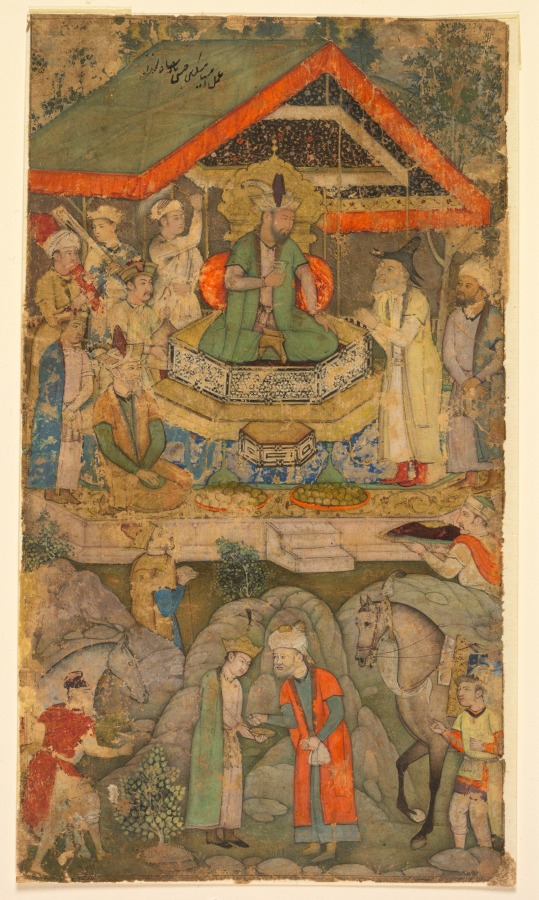
An Ambassador before Humayun (c. 1610; Cleveland 2013.320)

An Ambassador before Humayun (c. 1610): Art, History and Details

An Ambassador before Humayun at the Cleveland Museum of Art: c. 1610, Gum tempera and gold on paper. Explore the work's context, creator attribution and collection history.

Ghatotkacha and three demons in his company chase Bhagadatta, from Bhishma-parva (volume six) of a Razm-nama (Book of Wars) adapted from the Sanskrit Mahabharata and translated into Persian by Mir Ghiyath al-Din Ali Qazvini, known as Naqib Khan (Persian, d. 1614) (1616–17; Cleveland 2013.321)

Ghatotkacha and three demons in his company chase Bhagadatta, from Bhishma-parva (volume six) of a Razm-nama (Book of Wars) adapted from the Sanskrit Mahabharata and translated into Persian by Mir Ghi

Ghatotkacha and three demons in his company chase Bhagadatta, from Bhishma-parva (volume six) of a Razm-nama (Book of Wars) adapted from the Sanskrit Mahabharata and translated into Persian by Mir Ghiyath al-Din Ali Qazvini, known as Naqib

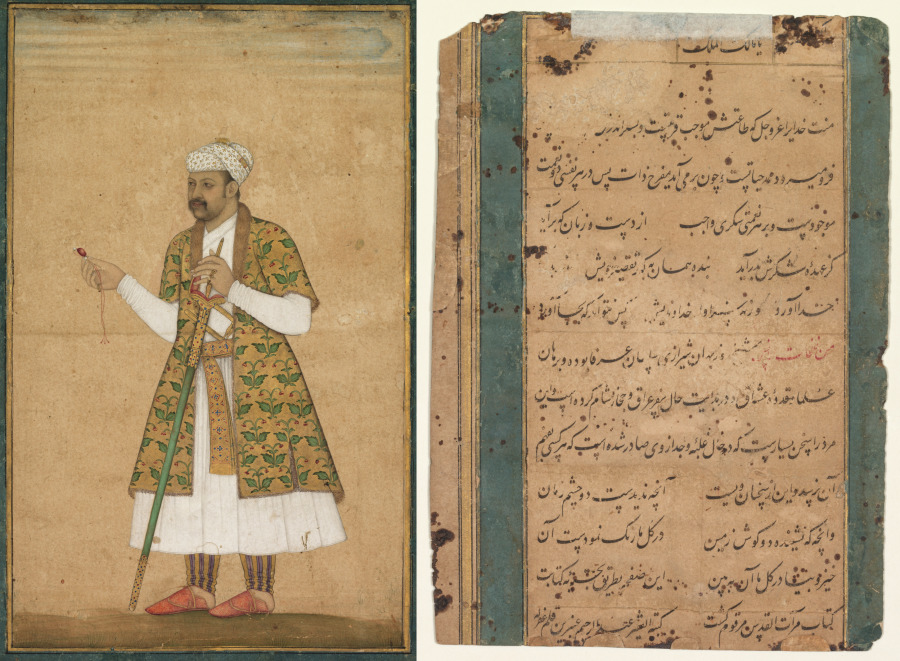
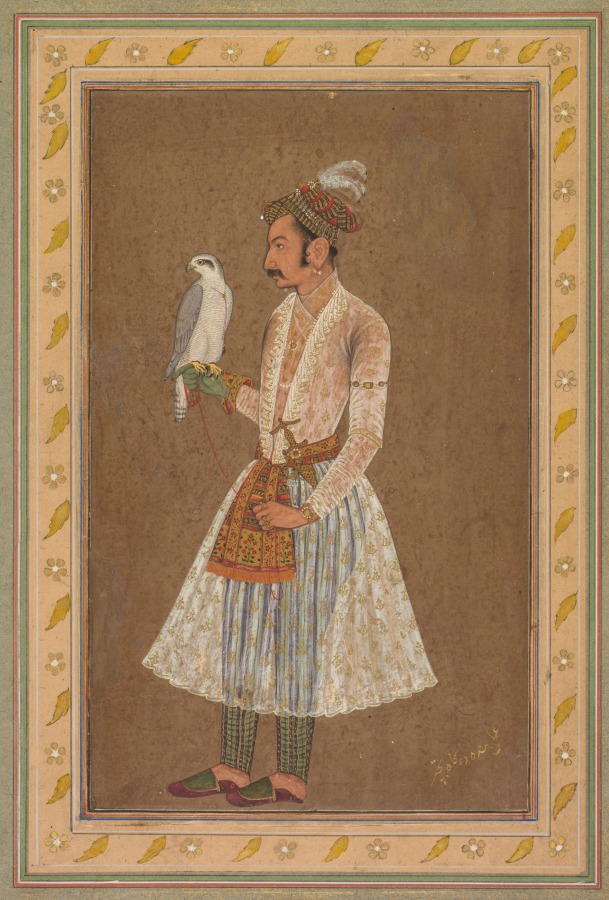
A Courtier, Possibly Khan Alam, Holding a Spinel and a Deccan Sword (c. 1605–10; Cleveland 2013.323)

A Courtier, Possibly Khan Alam, Holding a Spinel and a Deccan Sword (c. 1605–10): Art, History and Details

A Courtier, Possibly Khan Alam, Holding a Spinel and a Deccan Sword at the Cleveland Museum of Art: c. 1605–10, gum tempera, ink, and gold on paper, text on verso. Explore the work's context, creator attribution and collection history.

Portrait of Raja Jagat Singh of Nurpur (reigned 1618–46) (probably 1619; Cleveland 2013.324)

Portrait of Raja Jagat Singh of Nurpur (reigned 1618–46) (probably 1619): Art, History and Details

Portrait of Raja Jagat Singh of Nurpur (reigned 1618–46) at the Cleveland Museum of Art: probably 1619, Gum tempera and gold on paper. Explore the work's context, creator attribution and collection history.

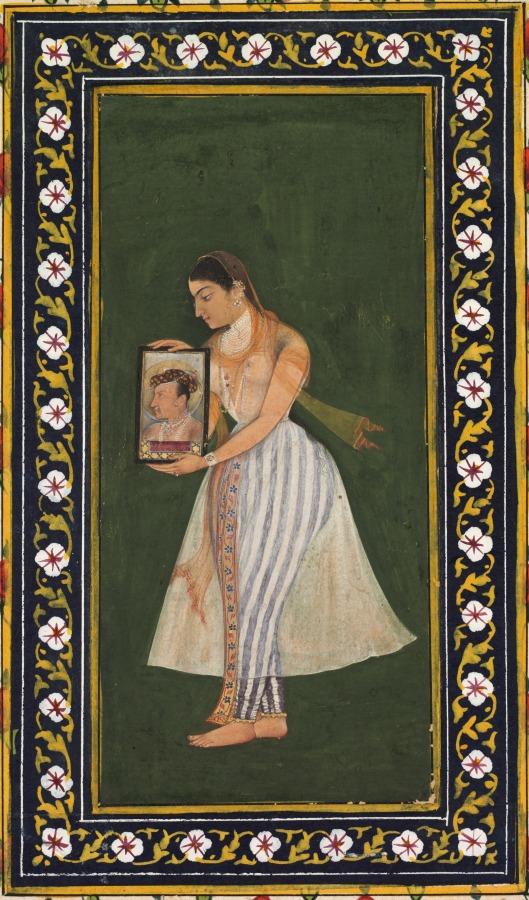
Nur Jahan holding a portrait of Emperor Jahangir (c. 1627; Cleveland 2013.325)

Nur Jahan holding a portrait of Emperor Jahangir (c. 1627): Art, History and Details

Nur Jahan holding a portrait of Emperor Jahangir at the Cleveland Museum of Art: c. 1627, gum tempera and gold on paper. Explore the work's context, creator attribution and collection history.