The Little Park (c. 1763): Art, History and Details
The Little Park at the Cleveland Museum of Art: c. 1763, etching. Explore the work's context, creator attribution and collection history.
Oldest entries first, in a fixed order. Newly added articles appear at the end. Explore a shuffled selection →
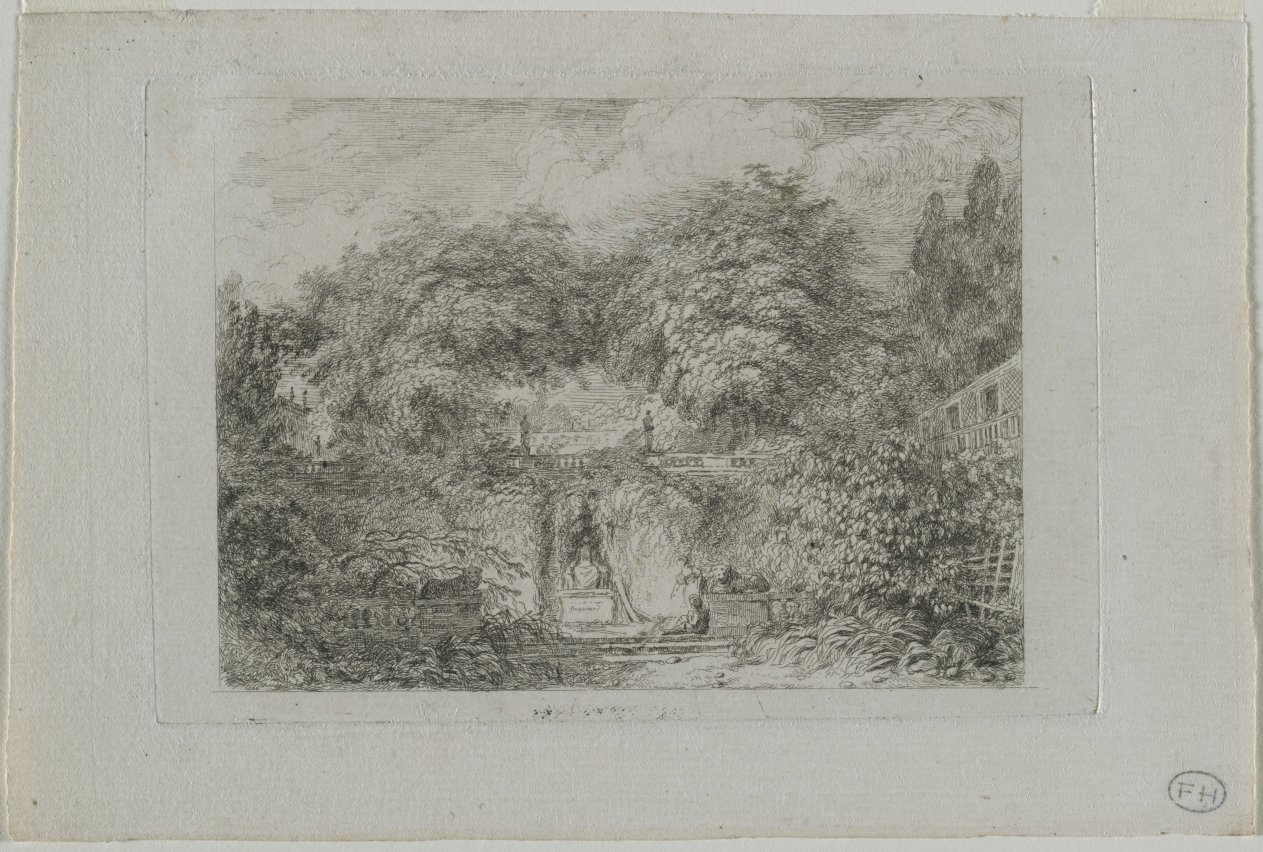
The Little Park at the Cleveland Museum of Art: c. 1763, etching. Explore the work's context, creator attribution and collection history.
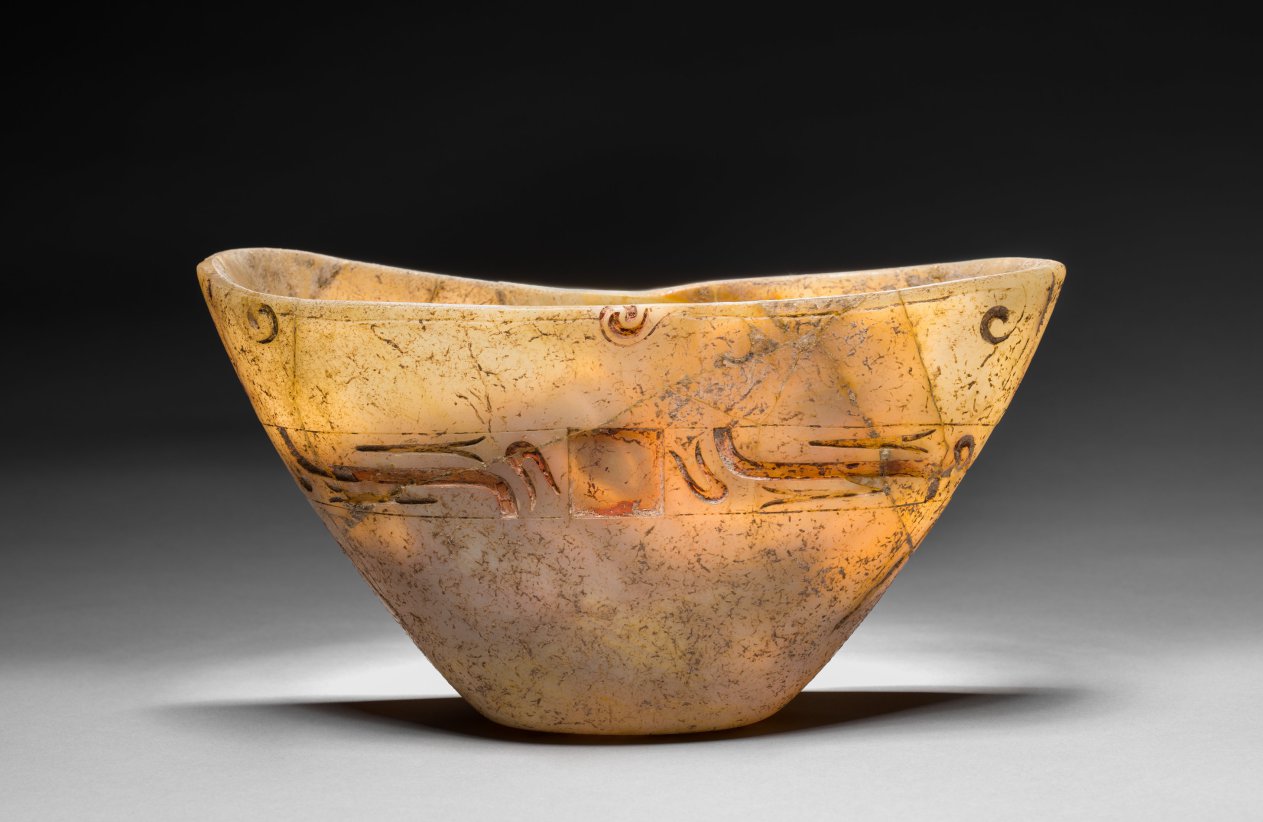
Carved Bowl at the Cleveland Museum of Art: 1200–300 BCE, stone (travertine). Explore the work's context, creator attribution and collection history.

Bust of a Classical Hero or Emperor at the Cleveland Museum of Art: early to mid-1500s, glazed terracotta. Explore the work's context, creator attribution and collection history.
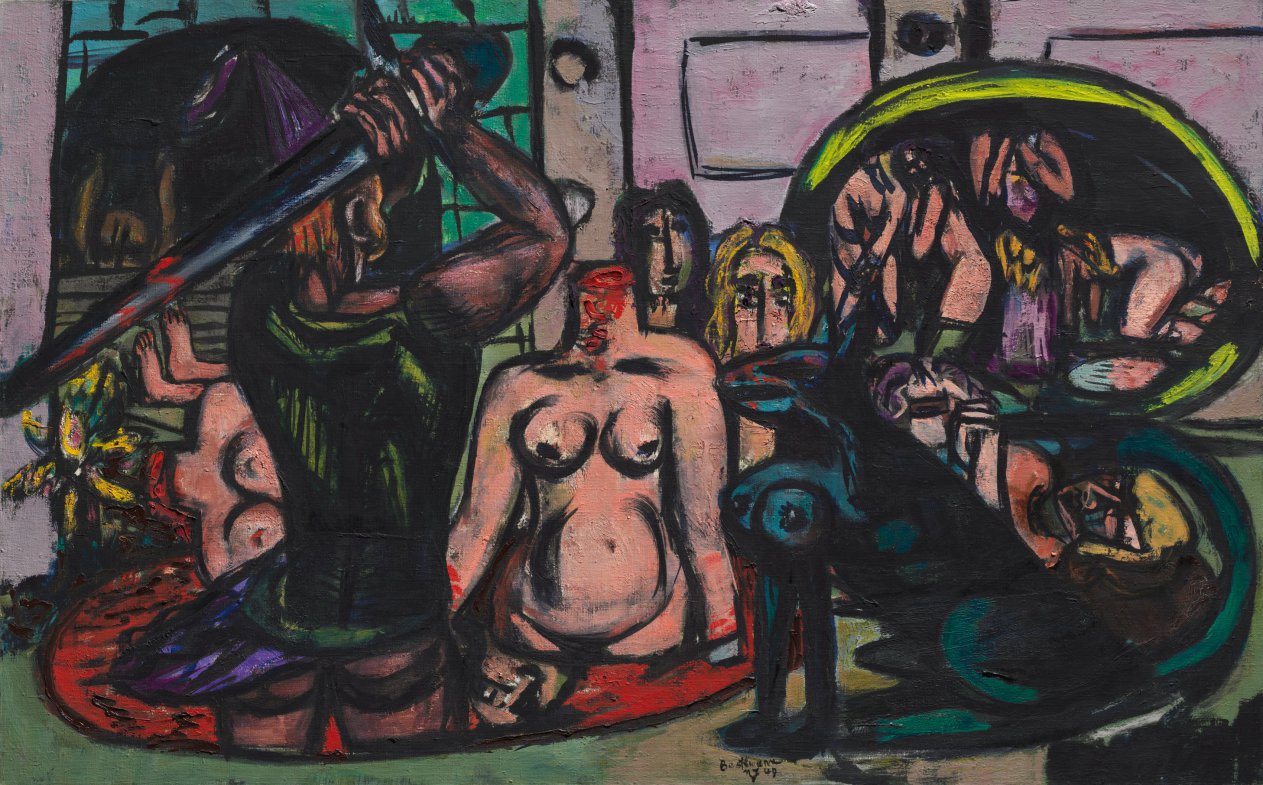
Perseus's Last Duty at the Cleveland Museum of Art: 1949, oil on canvas. Explore the work's context, creator attribution and collection history.

Portrait of Violinist Jean Vidal (1789–1867) at the Cleveland Museum of Art: 1808, black and gray chalk, with touches of white chalk, on tan wove paper. Explore the work's context, creator attribution and collection history.
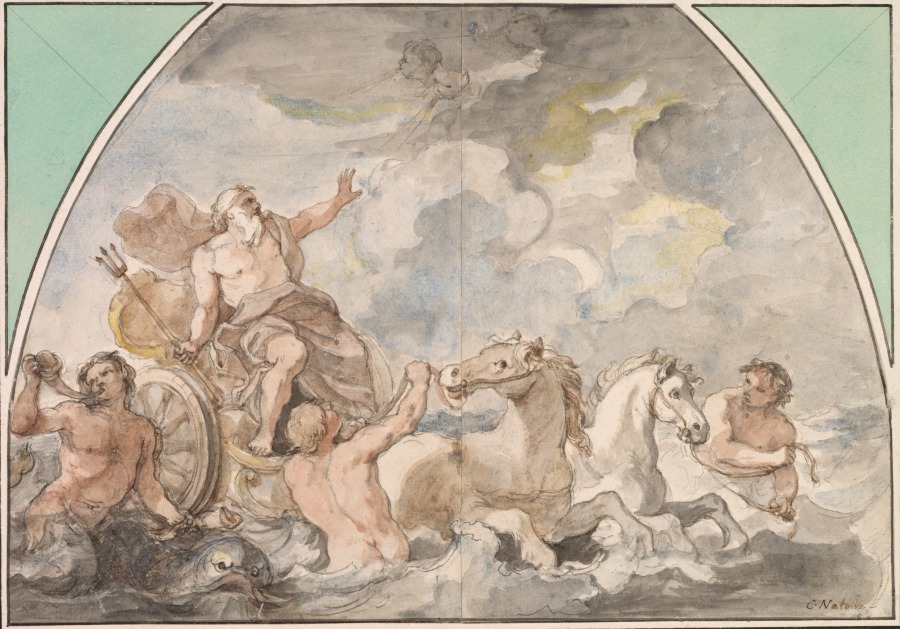
The Triumph of Neptune at the Cleveland Museum of Art: 1766 or later, Watercolor and black chalk on two sheets of cream laid paper. Explore the work's context, creator attribution and collection history.
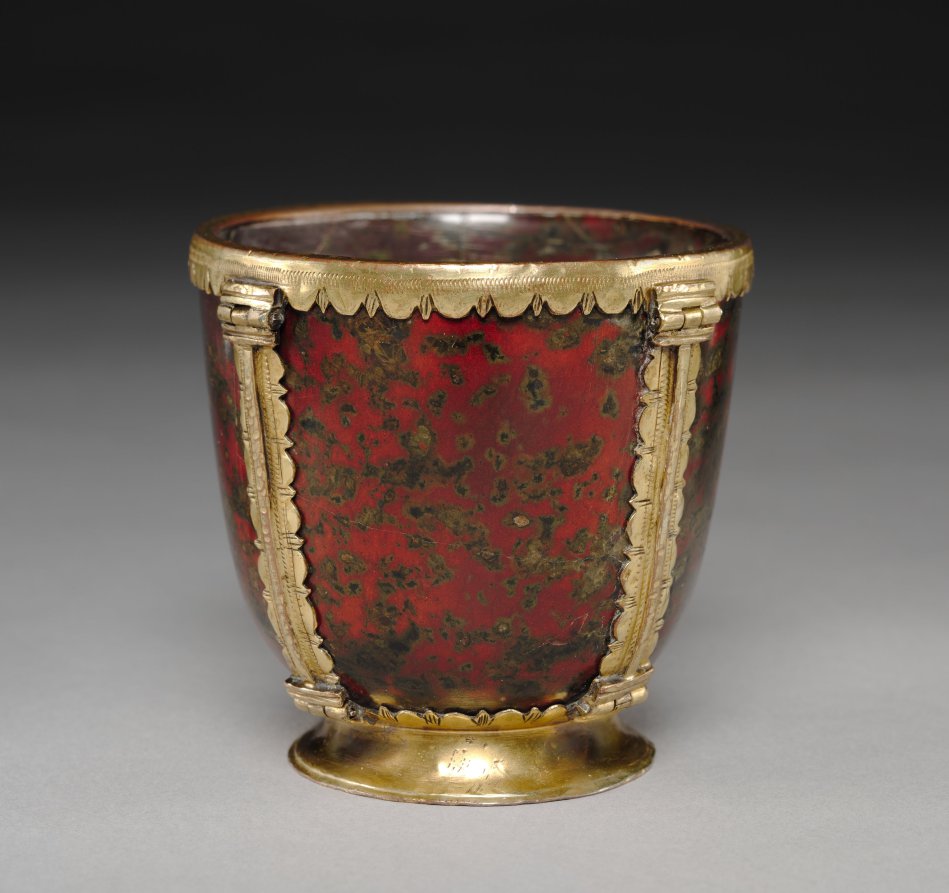
Calyx (Chalice) at the Cleveland Museum of Art: 900s-1000s, blood jasper (heliotrope) with gilt-copper mounts. Explore the work's context, creator attribution and collection history.
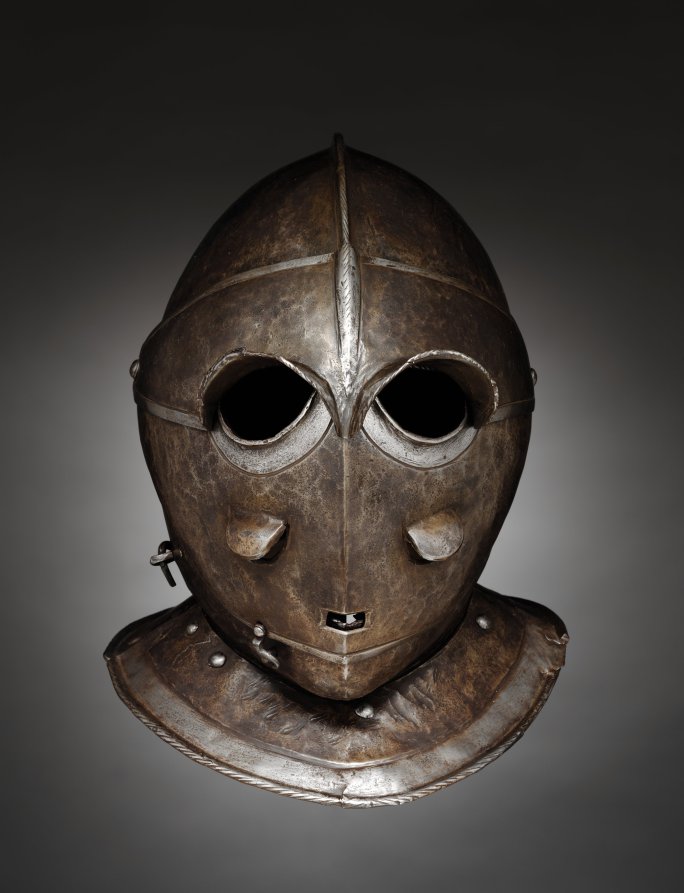
Savoyard Helmet (Todenkopf) at the Cleveland Museum of Art: c. 1600–20, steel, blackened. Explore the work's context, creator attribution and collection history.
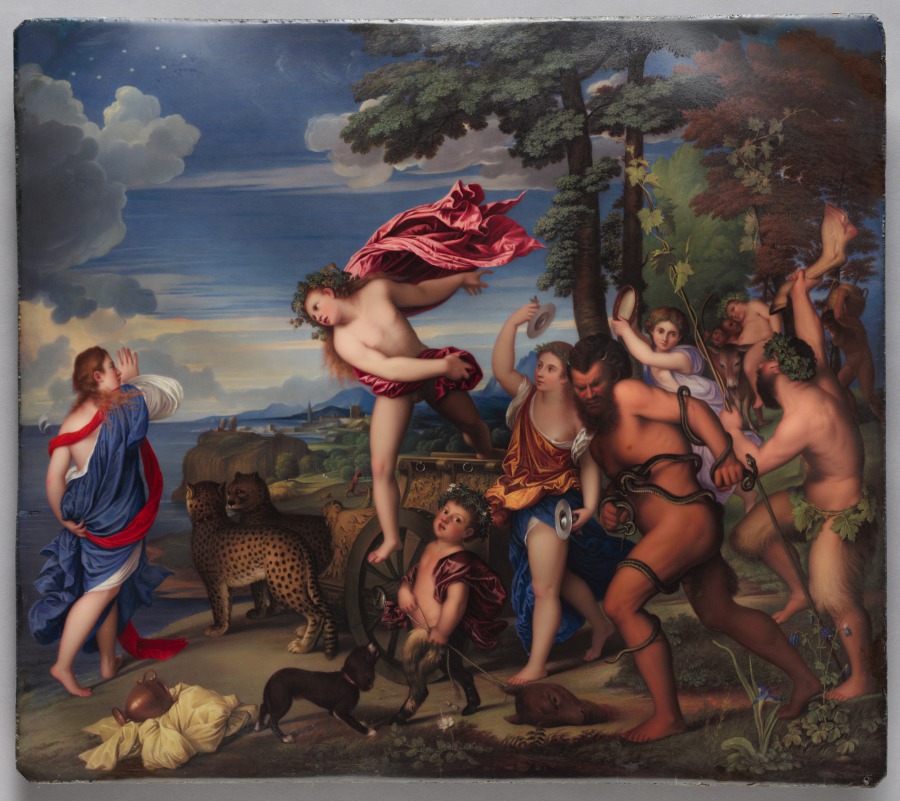
Bacchus and Ariadne at the Cleveland Museum of Art: 1808–11, enamel, in original gilt-wood and gesso carved frame. Explore the work's context, creator attribution and collection history.

Ceremonial Ladle (Wunkirmian or Wakemia) at the Cleveland Museum of Art: possibly late 1800s or early 1900s, Wood, twine, and possibly resin. Explore the work's context, creator attribution and collection history.
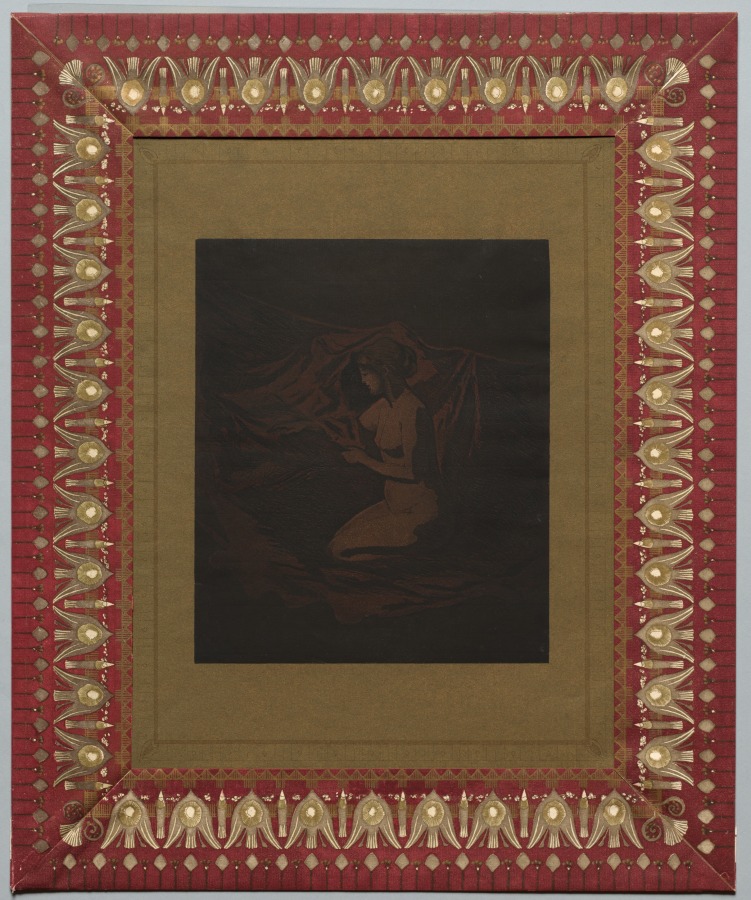
Embers Glow at the Cleveland Museum of Art: 1890–1897, color etching and aquatint mounted on original aquatint mount with etched and aquatinted framing papers surrounding the impression. Explore the work's context, creator attribution and c

London Types: Hawker at the Cleveland Museum of Art: 1898, woodcut hand-colored with watercolor. Explore the work's context, creator attribution and collection history.
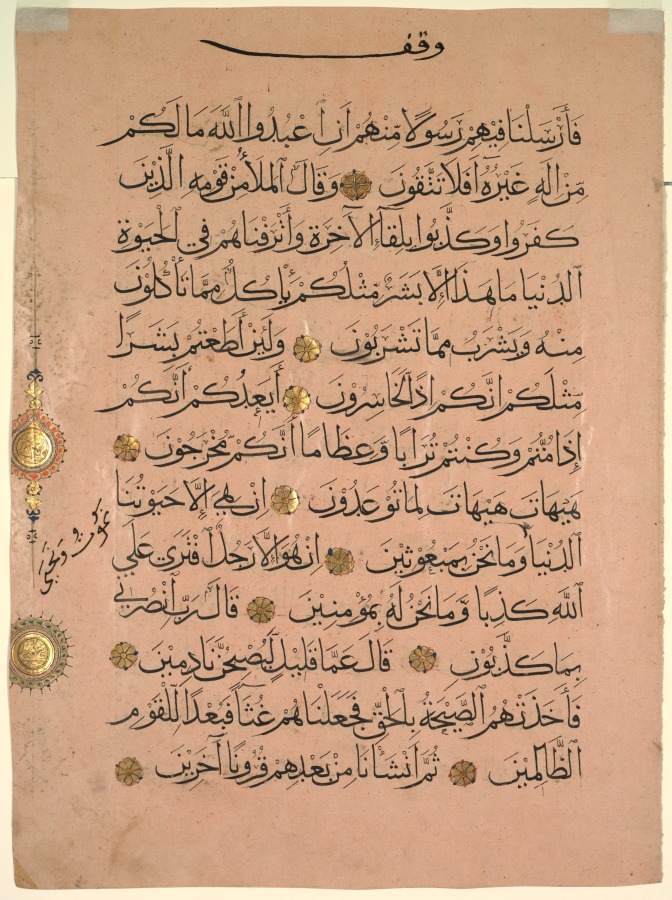
Leaf from a Qur'an at the Cleveland Museum of Art: 1300s, ink, gold, color on pink paper. Explore the work's context, creator attribution and collection history.

Leaf from a Qur'an (recto) at the Cleveland Museum of Art: 1300s, ink, gold, color on pink paper. Explore the work's context, creator attribution and collection history.
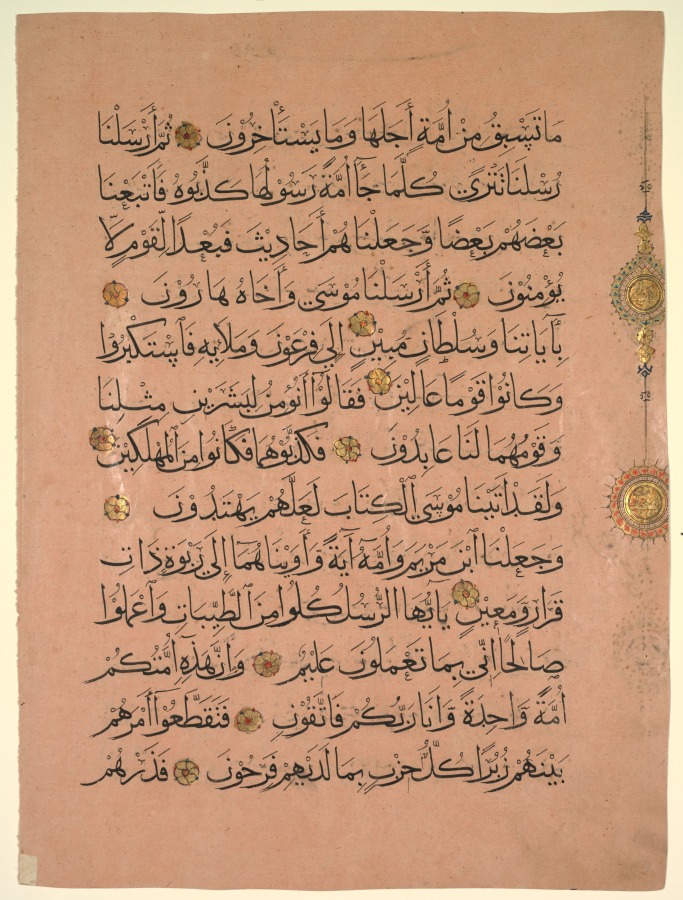
Leaf from a Qur'an (verso) at the Cleveland Museum of Art: 1300s, ink, gold, color on pink paper. Explore the work's context, creator attribution and collection history.

Barnaby Rudge Helping Lead the Gordon Riots at the Cleveland Museum of Art: 1884, watercolor with traces of graphite. Explore the work's context, creator attribution and collection history.
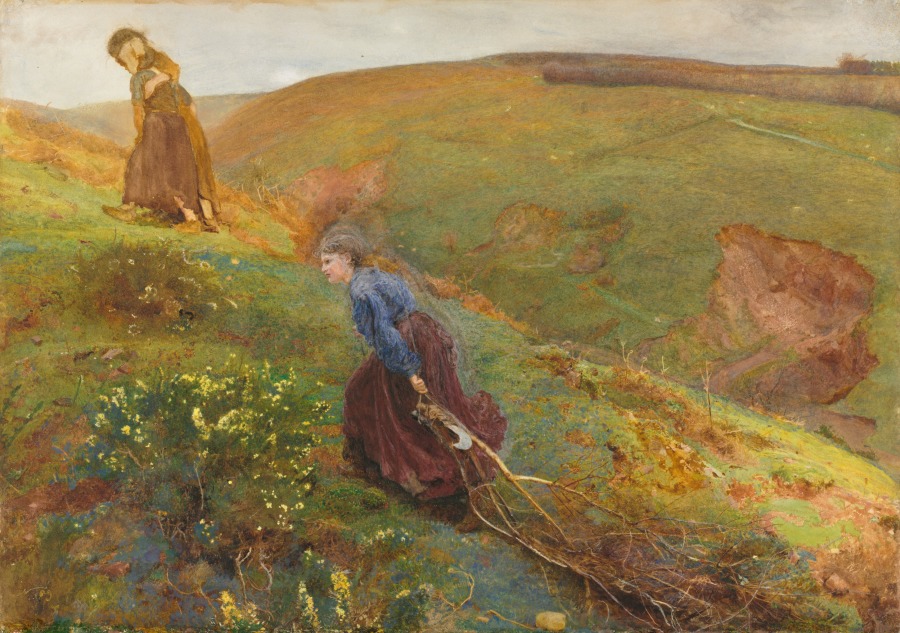
The Wood Gatherers at the Cleveland Museum of Art: 1869, watercolor and gouache with scratch-away and touches of shell gold. Explore the work's context, creator attribution and collection history.

Steps in a Garden at the Cleveland Museum of Art: 1860, watercolor and gouache with scratch-away technique to create highlights on sturdy-weight wove paper mounted to same by artist with color tests in margins of mount. Explore the work's c
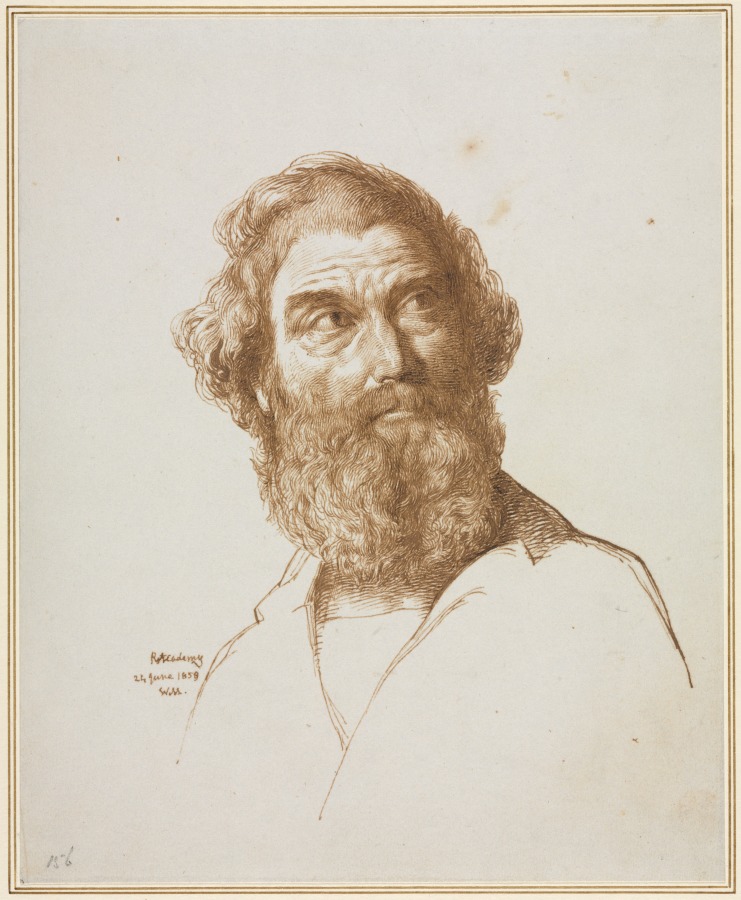
Head of a Bearded Man Gazing to His Left at the Cleveland Museum of Art: 1859, pen and brown ink. Explore the work's context, creator attribution and collection history.
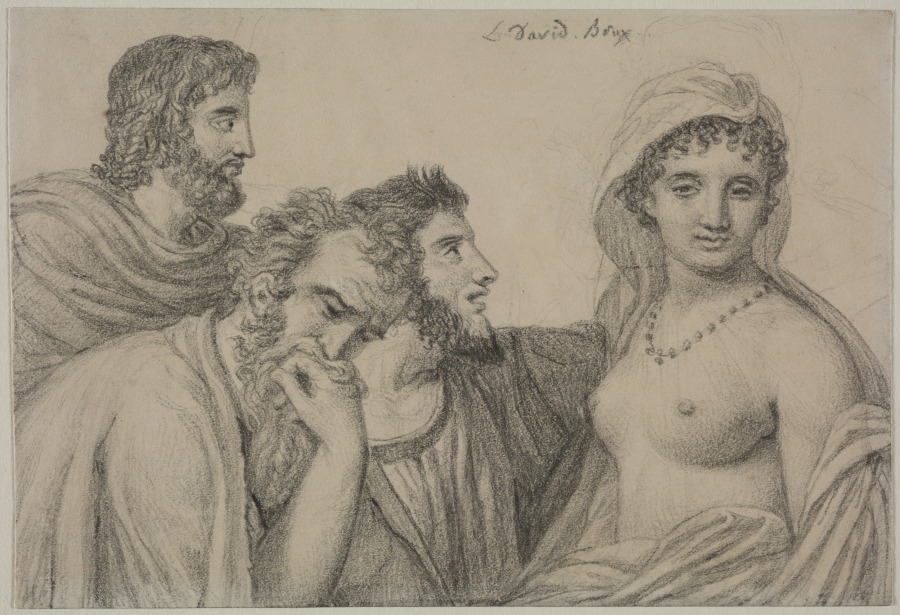
Phryne before Her Judges at the Cleveland Museum of Art: c. 1816–20, black chalk on wove paper discolored to beige. Explore the work's context, creator attribution and collection history.
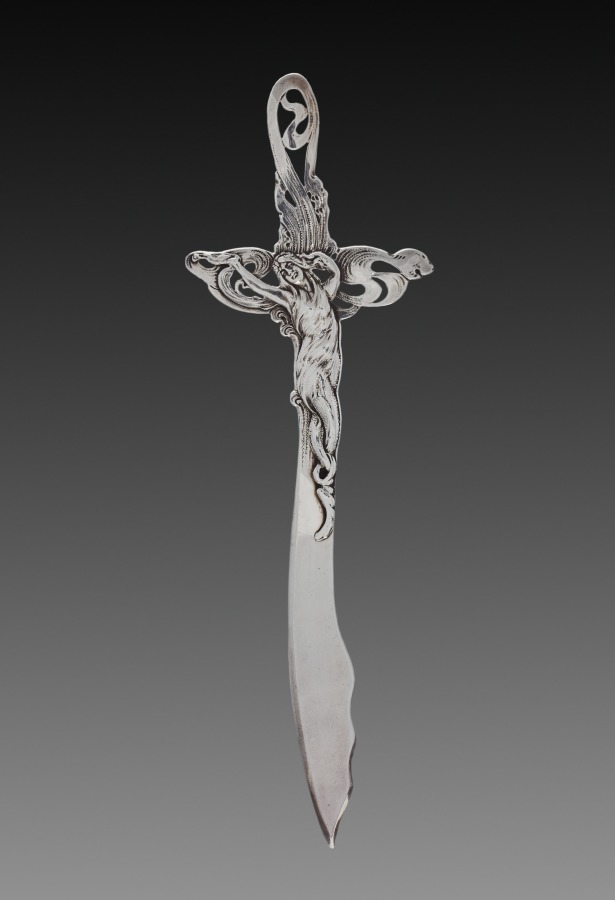
Paper Knife at the Cleveland Museum of Art: c. 1900, silver. Explore the work's context, creator attribution and collection history.

Destitute Mother and Child in Winter at the Cleveland Museum of Art: c. 1850, oil on canvas. Explore the work's context, creator attribution and collection history.

Cordelia Parting from her Sisters at the Cleveland Museum of Art: 1854, pen and oil on paper on panel. Explore the work's context, creator attribution and collection history.
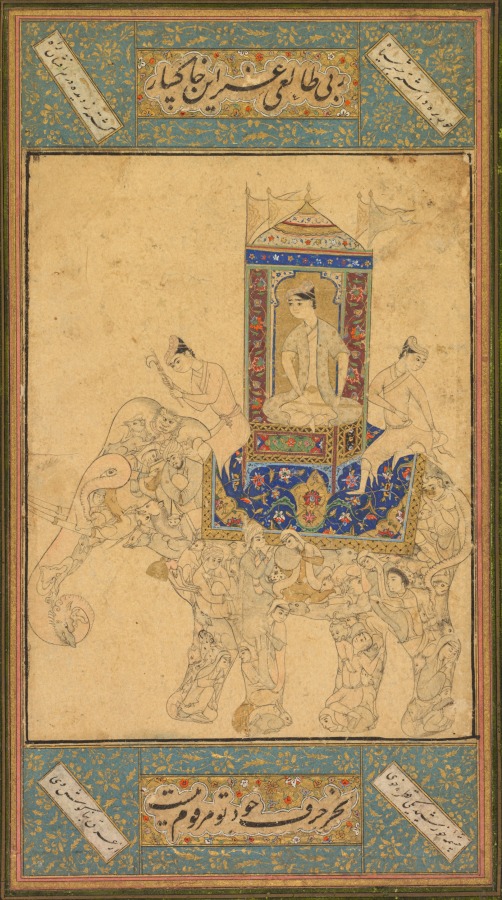
A prince riding a composite elephant at the Cleveland Museum of Art: c. 1590, Gum tempera, ink, and gold on paper. Explore the work's context, creator attribution and collection history.
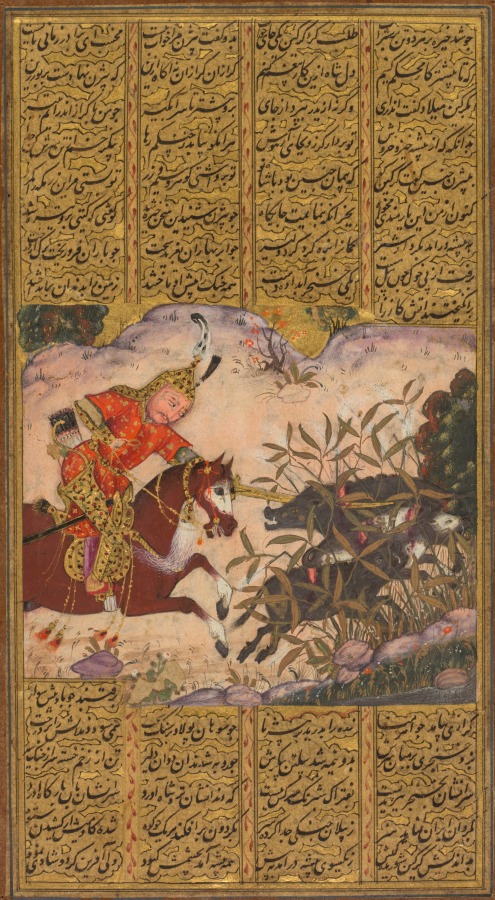
Bijan killing the wild boars of Irman, from a Shah-nama (Book of Kings) of Firdausi (Persian, about 934–1020) at the Cleveland Museum of Art: c. 1610, Gum tempera, ink, and gold on paper. Explore the work's context, creator attribution and
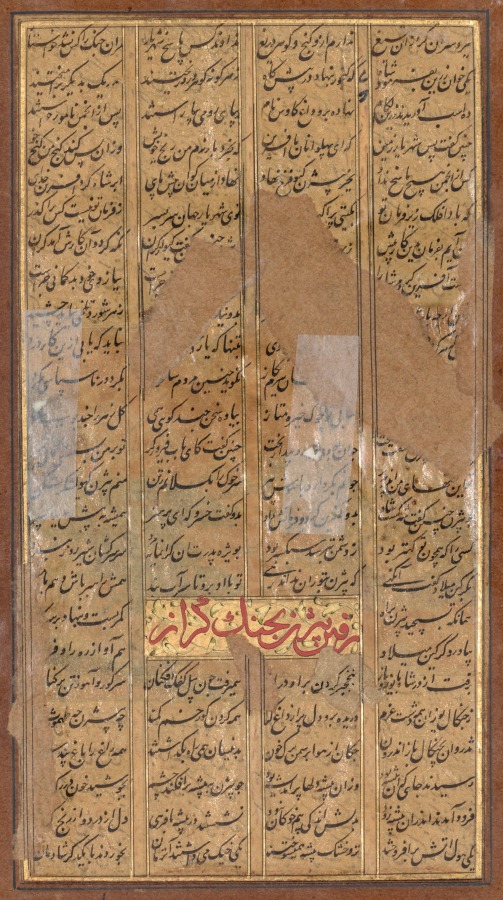
Bijan killing the wild boars of Irman, from a Shah-nama (Book of Kings) of Firdausi (Persian, about 934–1020), (recto) at the Cleveland Museum of Art: c. 1610, Gum tempera, ink, and gold on paper. Explore the work's context, creator attribu
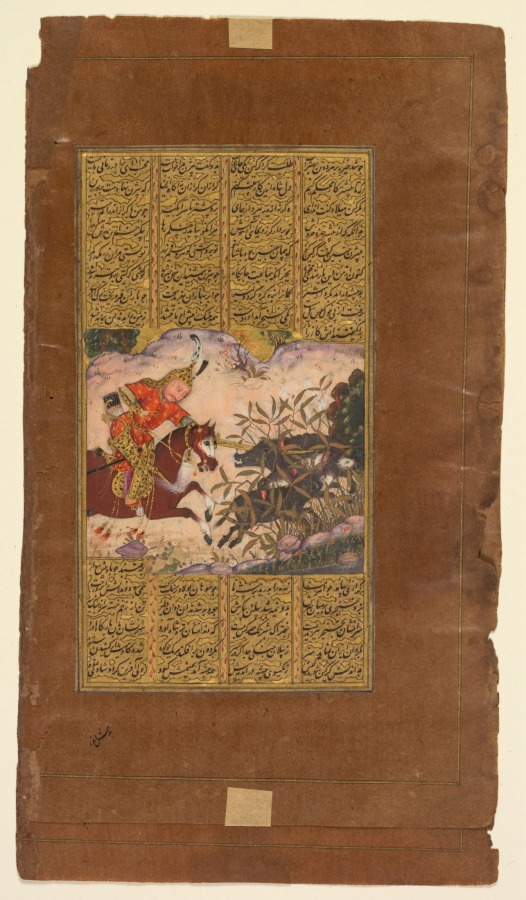
Bijan killing the wild boars of Irman, from a Shah-nama (Book of Kings) of Firdausi (Persian, about 934–1020) (verso) at the Cleveland Museum of Art: c. 1610, Gum tempera, ink, and gold on paper. Explore the work's context, creator attribut
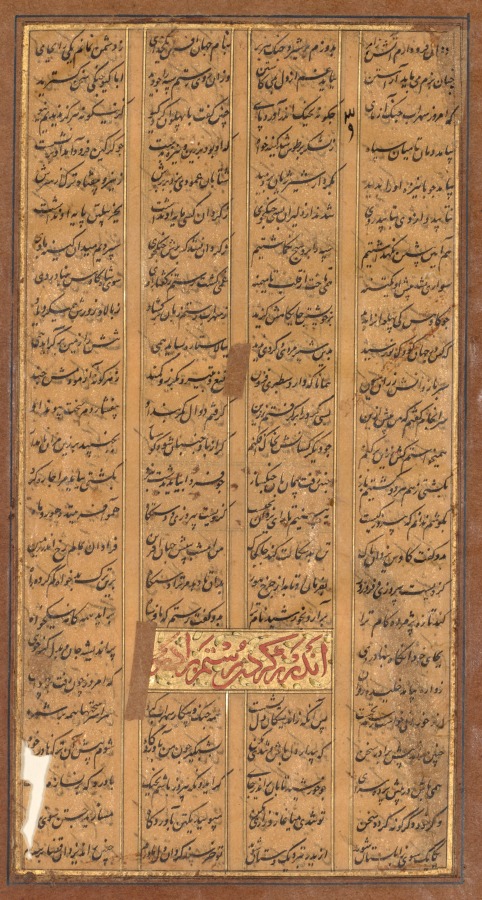
Text of Rustam and Suhrab, from the Shah-nama of Firdausi (Persian, c. 934–1020) (recto) at the Cleveland Museum of Art: c. 1610, Gum tempera, ink, and gold on paper. Explore the work's context, creator attribution and collection history.
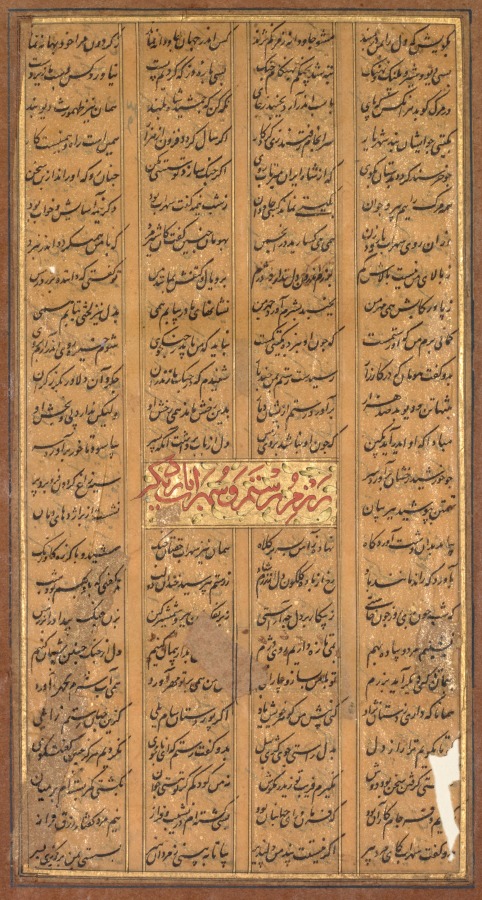
Text of Rustam and Suhrab, from the Shah-nama of Firdausi (Persian, c. 934–1020) (verso) at the Cleveland Museum of Art: c. 1610, Gum tempera, ink, and gold on paper. Explore the work's context, creator attribution and collection history.
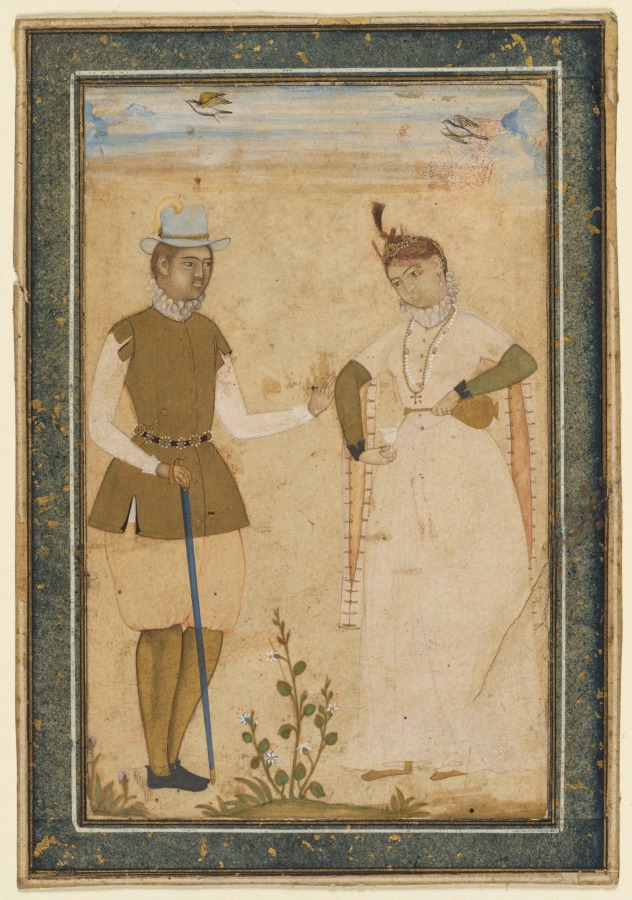
A European Couple at the Cleveland Museum of Art: c. 1610–27, Gum tempera and gold on paper. Explore the work's context, creator attribution and collection history.
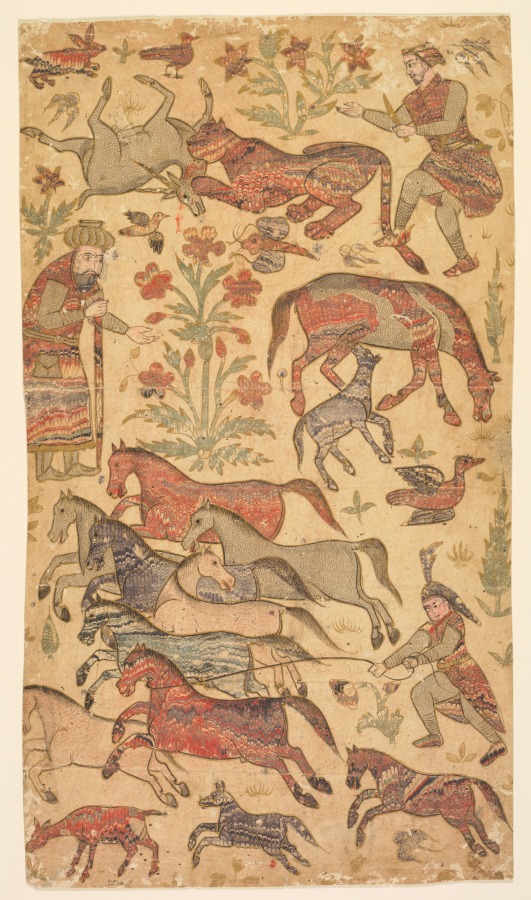
A marbled picture of Rustam catching Rakhsh at the Cleveland Museum of Art: c. 1650, Gum tempera and gold on paper. Explore the work's context, creator attribution and collection history.
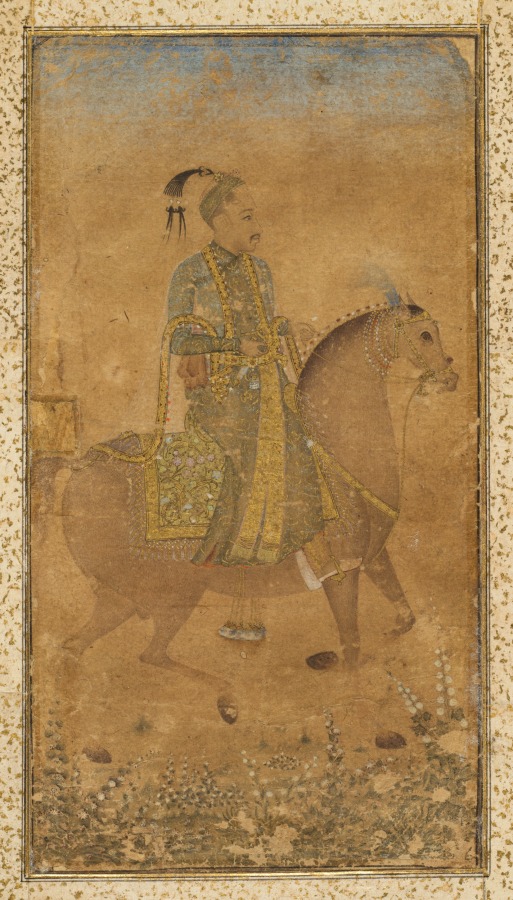
Sultan Abdullah Qutb Shah (1614-74) on Horseback at the Cleveland Museum of Art: c. 1635, Ink, watercolor, and gold on paper, mounted with gold-sprinkled borders. Explore the work's context, creator attribution and collection history.

An African Lyre Player (recto) at the Cleveland Museum of Art: c. 1640–60, Gum tempera, ink, and gold on paper. Explore the work's context, creator attribution and collection history.
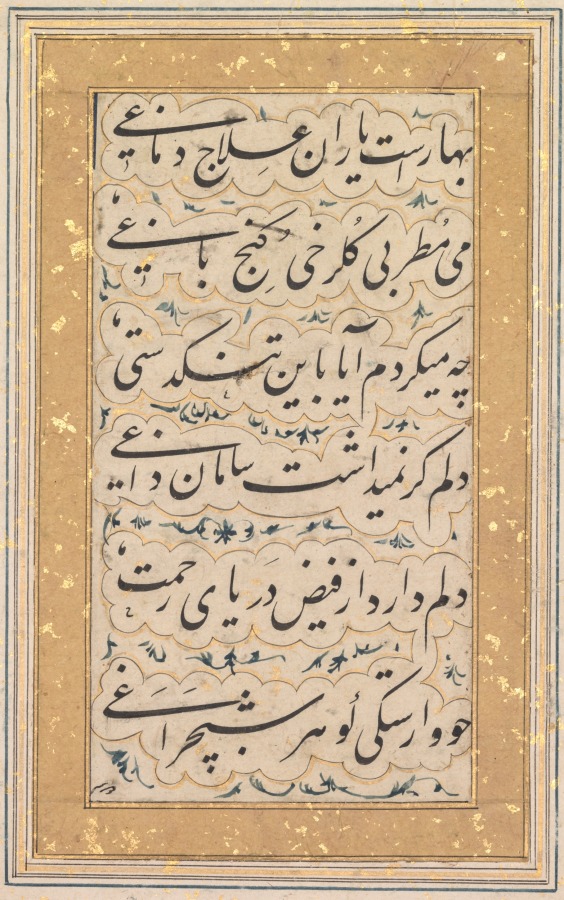
Calligraphy (verso) at the Cleveland Museum of Art: c. 1640–60, Gum tempera, ink, and gold on paper. Explore the work's context, creator attribution and collection history.

Women playing at cross-dressing at the Cleveland Museum of Art: c. 1680–1700; border added 1800s, ink heightened with colors on paper. Explore the work's context, creator attribution and collection history.
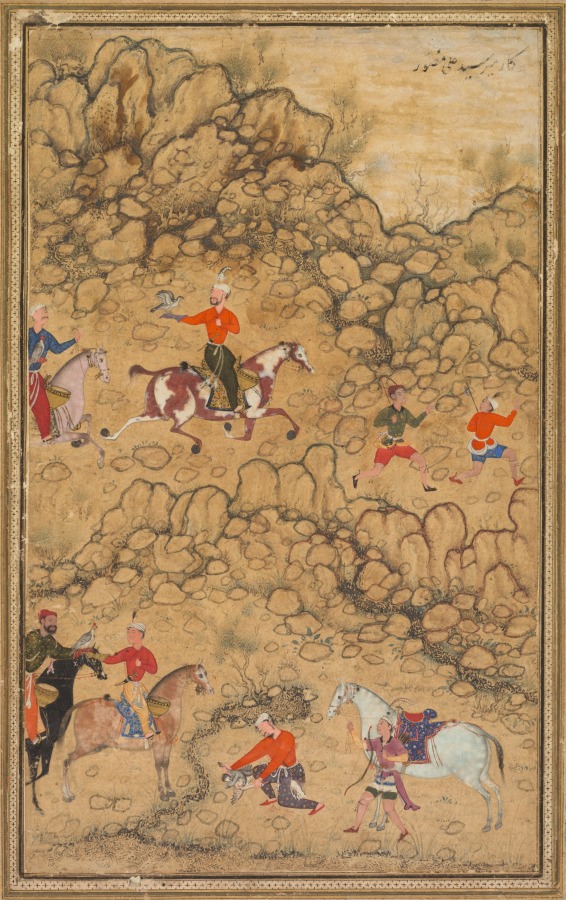
Hunting with falcons in a landscape; verso: Calligraphy of Chaghatai Turkish poems in praise of wine, Sultan Muhammad Nur (Persian, c. 1472–1536) and Mirza Muhammad (probably Persian, active c. 1520s) at the Cleveland Museum of Art: c. 1558
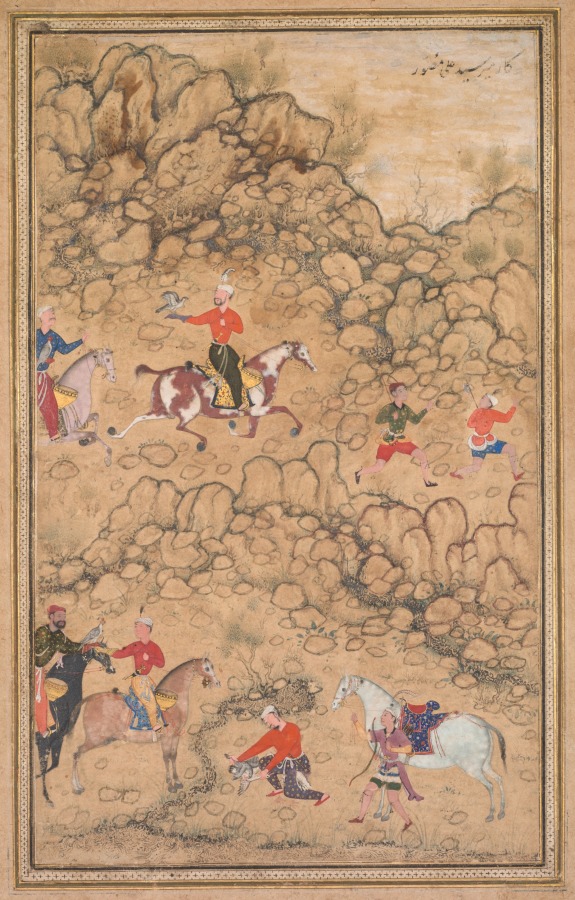
Hunting with falcons in a landscape (recto) at the Cleveland Museum of Art: c. 1558–60; borders added probably 1700s, Gum tempera, ink, and gold on paper. Explore the work's context, creator attribution and collection history.
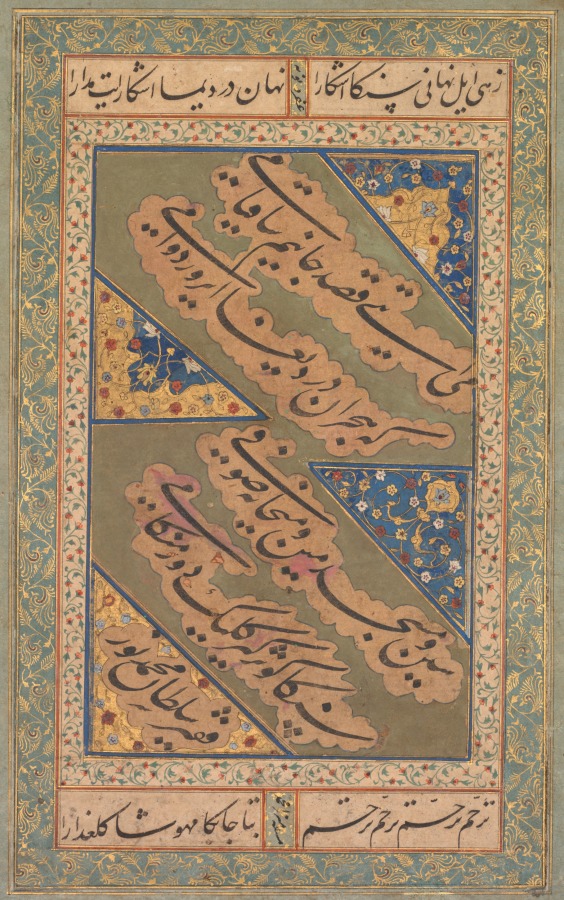
Calligraphy of Chaghatai Turkish Poems in Praise of Wine (verso) at the Cleveland Museum of Art: c. 1500–1520, Gum tempera, ink, and gold on paper. Explore the work's context, creator attribution and collection history.

A Mughal Prince, Perhaps Danyal, Holding a Sprig of Flowers at the Cleveland Museum of Art: c. 1580–90, Gum tempera and gold on paper. Explore the work's context, creator attribution and collection history.
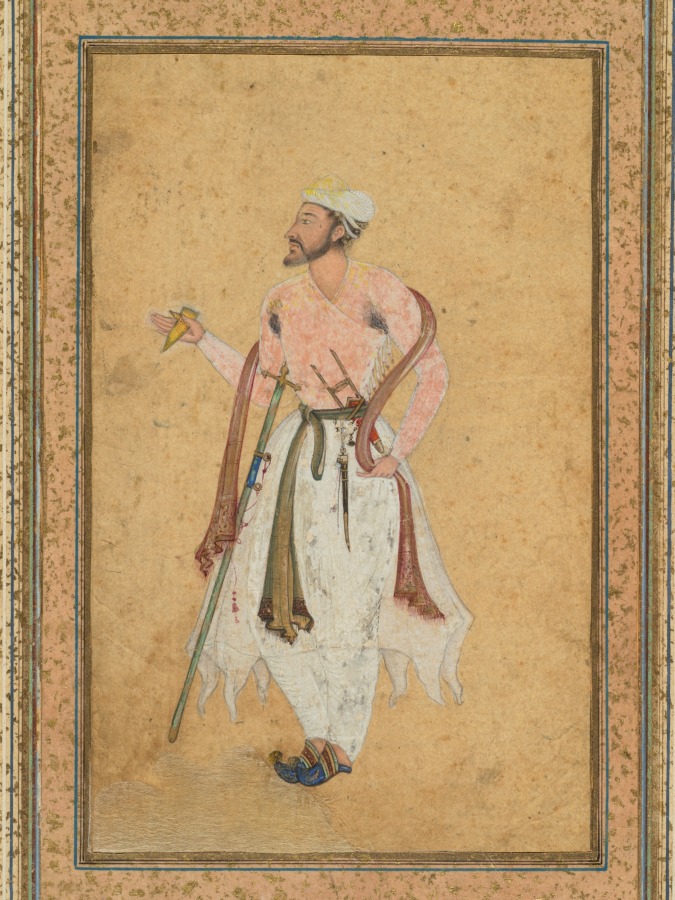
A Mughal courtier at the Cleveland Museum of Art: c. 1575; border added probably 1700s, Gum tempera and gold on paper, mounted with gold-sprinkled borders. Explore the work's context, creator attribution and collection history.